Grid Instability: Why Cooling is Now a Survival Skill
In the past decade, the stability of electrical grids worldwide has been challenged by extreme weather events. From the sweltering heat domes of the Pacific Northwest to the rolling blackouts of California and the sudden infrastructure failures in Texas, one truth has become clear: you cannot rely 100% on the grid to keep you safe.
For healthy adults, a power outage during a heatwave is uncomfortable. For the elderly, infants, or those with medical conditions (such as multiple sclerosis or heart conditions), a lack of cooling can quickly escalate from an inconvenience to a life-threatening medical emergency. Heat stroke can set in within hours in a house that has lost air conditioning.
Traditional solutions like gasoline generators are noisy, require fuel storage (which may be unavailable during a crisis), and pose carbon monoxide risks if not used perfectly. The modern, safe solution is a battery powered ac—a cooling system designed to run independently of the grid, powered by stored energy and replenished by the sun.
The Physics of Emergency Cooling: Why Window Units Fail
Many homeowners assume they can simply plug their existing 5,000 BTU window air conditioner into a portable power station (like a Jackery or EcoFlow) during a blackout. In practice, this often results in immediate failure. Understanding why requires a look at the electrical engineering behind compressors.
1. The Inverter Tax
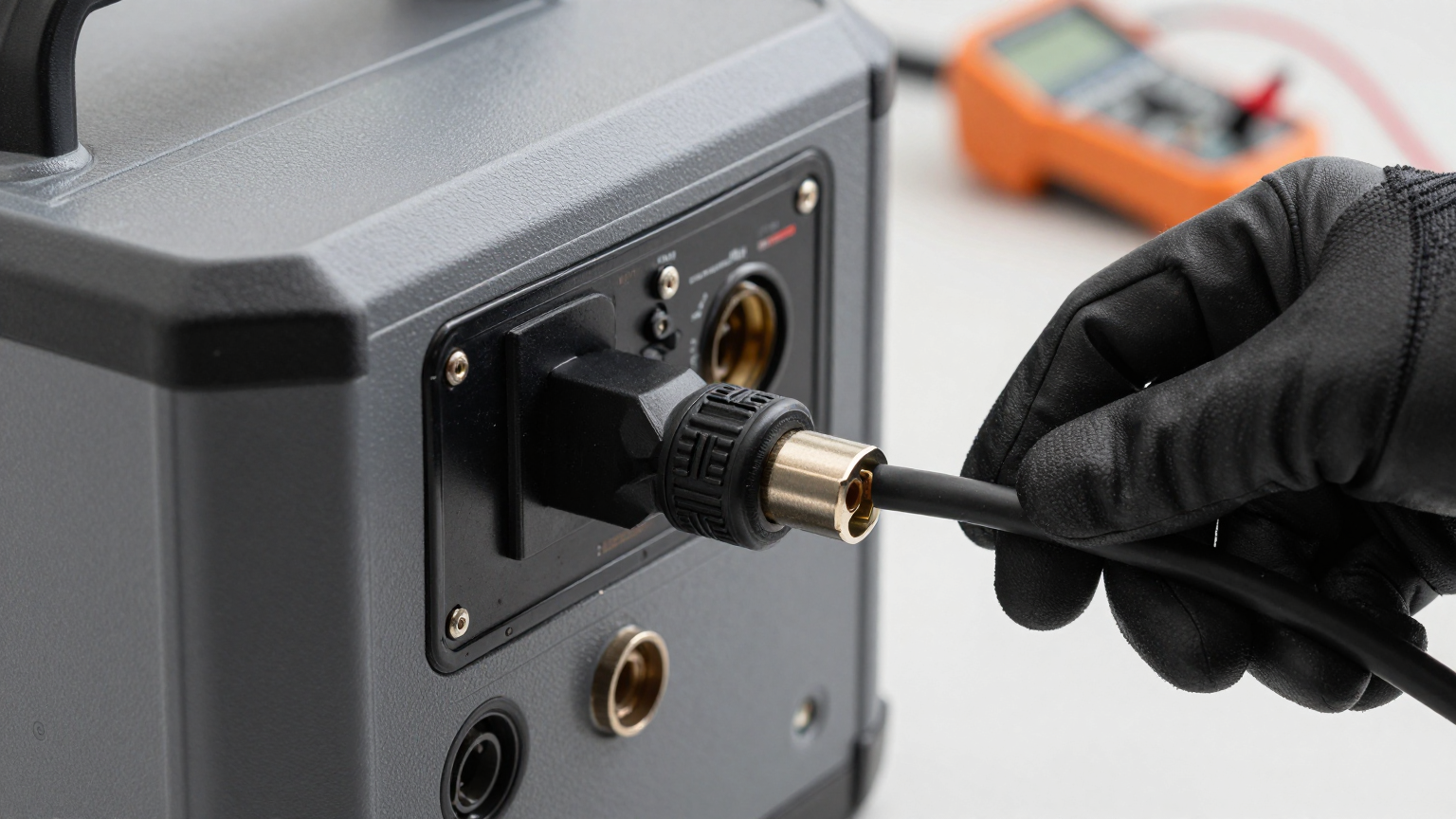
Portable power stations store energy as DC (Direct Current) electricity. Standard appliances use AC (Alternating Current). To run a window unit, the power station must use an internal inverter to convert DC to AC. This process is never 100% efficient. Typically, 15% to 20% of your precious battery capacity is lost as heat during this conversion. If you have a 1000Wh battery, you effectively only have 800Wh available for cooling.
2. The Surge Current (Locked Rotor Amps)
Traditional AC compressors are “hard start” devices. When they kick on, they can draw 3 to 5 times their running wattage for a split second. A unit that runs at 500W might surge to 2500W at startup. This spike often trips the overload protection on medium-sized battery generators, causing them to shut down instantly.
The Rigid DC Advantage: Native Efficiency
RigidChill portable air conditioners are engineered differently. They are DC-Native appliances. They connect directly to the 12V or 24V DC output ports of your solar generator or battery bank.
- Zero Conversion Loss: By bypassing the inverter entirely, you gain that 20% efficiency back. On a limited battery budget, this can mean an extra 2-3 hours of runtime per night.
- Soft Start Technology: Rigid units use variable-speed BLDC (Brushless DC) compressors. Instead of slamming on at full power, they ramp up slowly over several seconds. This eliminates the surge spike, allowing even modest battery banks to run the unit without tripping.
Sizing Your Emergency Power System
To build a reliable backup cooling system, you must match your battery capacity to the cooling load. The Rigid LC2810E typically draws between 100W (Eco Mode) and 250W (Max Cool). Let’s look at some real-world runtime scenarios.
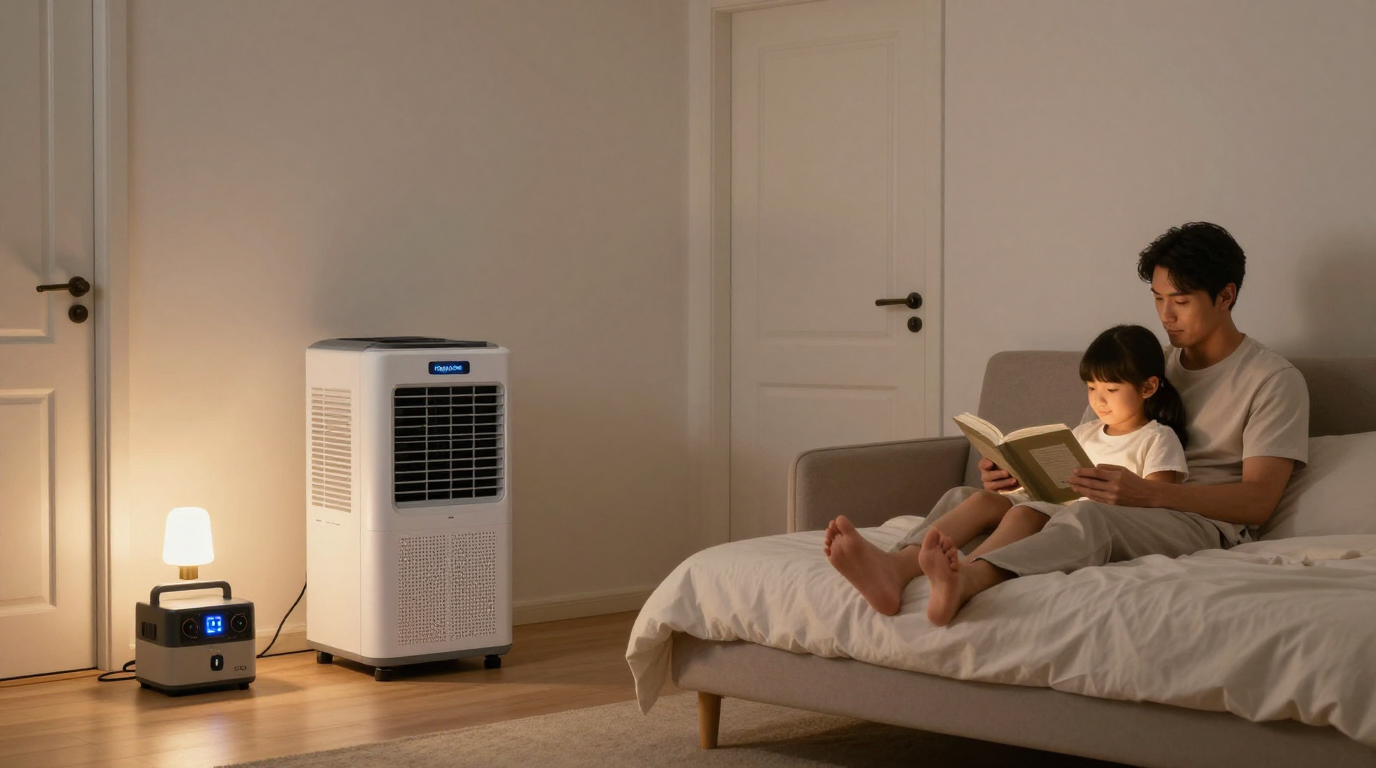
Scenario A: The “Cool Sleep” (1000Wh Battery)
Target: Keep one bedroom cool for sleeping (8 hours).
- Battery: Jackery 1000 or EcoFlow Delta 2.
- Strategy: Pre-cool the room before bed using max power, then switch to Eco Mode (Sleep Mode) for the night.
- Math: 1000Wh / 125W (avg) = 8 Hours.
- Result: You get a full night’s sleep. You will need to recharge the battery the next day via solar or a vehicle.
Scenario B: The “Daytime Refuge” (2000Wh+ Battery)
Target: Keep a small room livable during the hottest part of the day.
- Battery: Bluetti AC200MAX or EcoFlow Delta Pro.
- Strategy: Run the unit to combat solar gain during the afternoon peak (1 PM – 6 PM).
- Math: 2000Wh / 200W (higher load due to day heat) = 10 Hours.
- Result: You have ample buffer to run lights and charge phones as well.
Solar Charging: Achieving Infinite Runtime
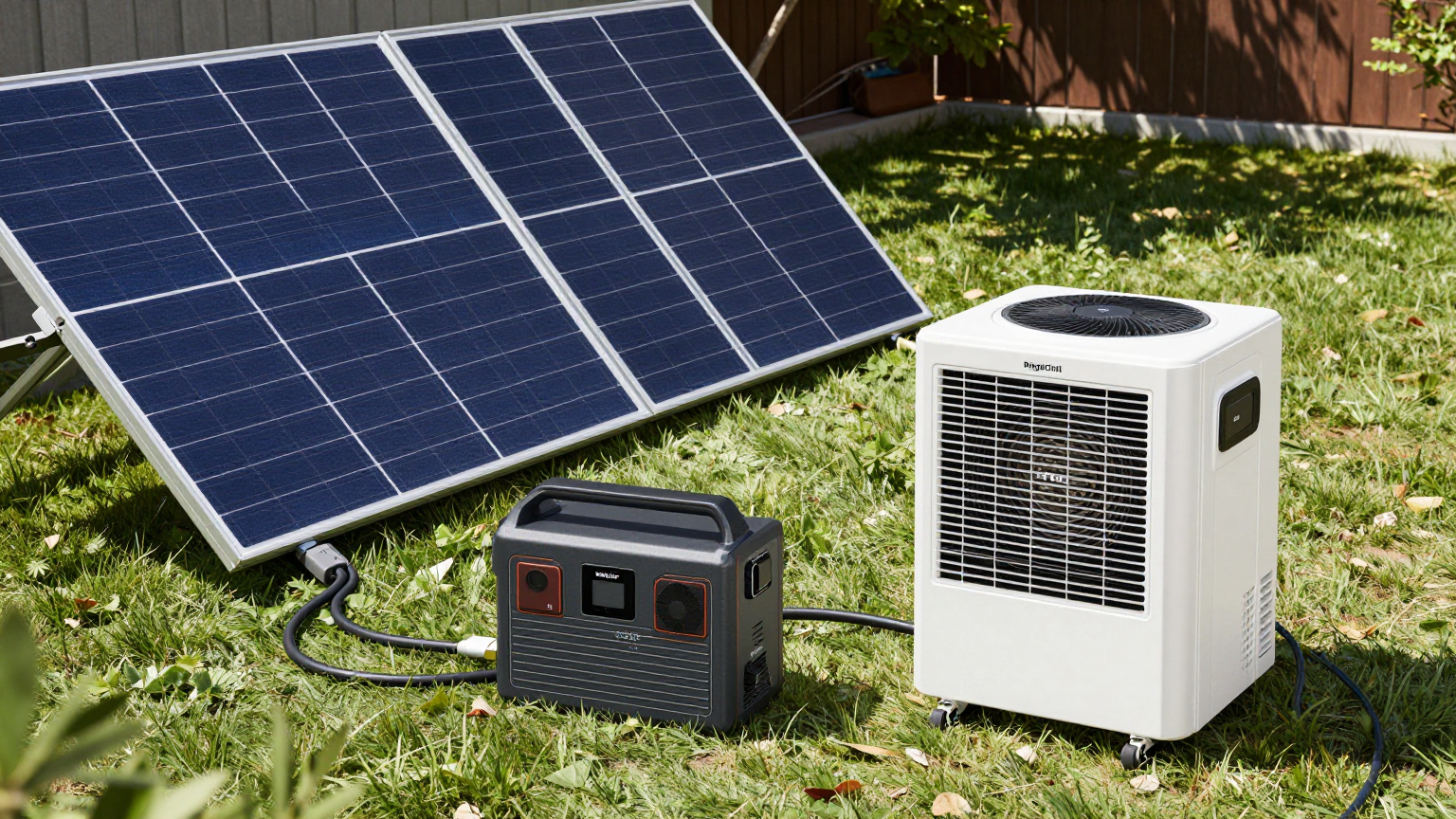
The “Holy Grail” of emergency prep is a system that doesn’t just last one night, but can run indefinitely. Because Rigid units are so efficient, they are uniquely capable of running directly off solar input.
If you have 400W of folding solar panels, you might generate 300W of real-world input power in direct sun. Since the Rigid AC only consumes ~150W, you are in a Net Positive energy state. You are cooling the room AND charging the battery at the same time. This pass-through capability means that as long as the sun shines, you have air conditioning.
Installation During a Crisis
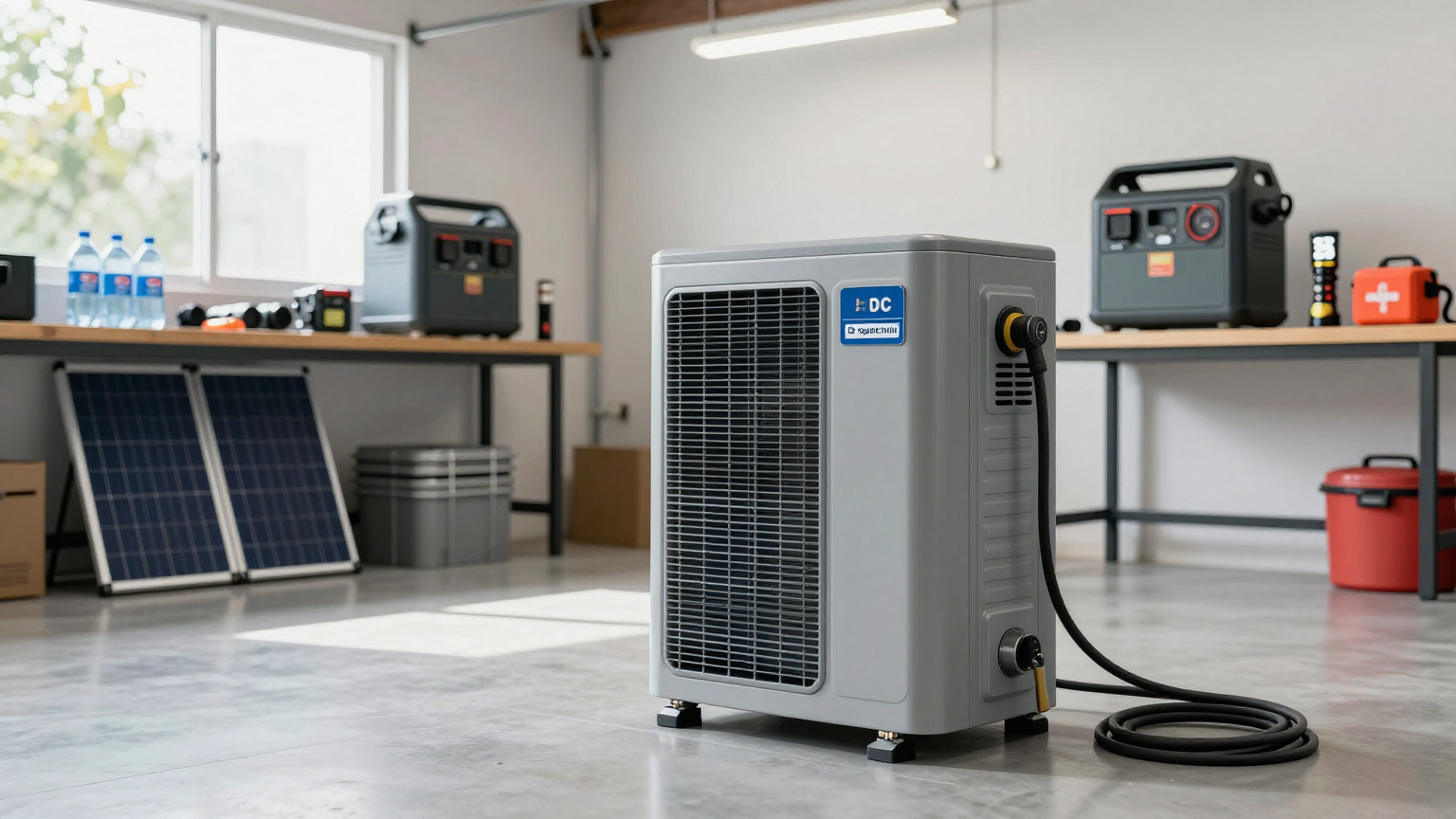
When the power goes out, you need to set up fast. Unlike a mini-split which requires professional installation, the Rigid Portable AC can be deployed in 5 minutes.
- Place the Unit: Set the unit on a sturdy table or the floor in the room you intend to occupy (the “Safe Room”). Close all doors to this room to minimize the cooling volume.
- Vent the Heat: This is critical. You must route the exhaust hose out a window. In an emergency, if you don’t have a window kit, you can use cardboard, plywood, or even a heavy blanket to block the rest of the window opening. The goal is to prevent hot outside air from entering and exhaust air from recirculating.
- Connect Power: Plug the aviation connector into the DC port of your power station. Ensure the voltage matches (12V or 24V).
- Manage Condensate: In high humidity, the unit will pull moisture from the air. Connect the drain hose and route it into a bucket or out the window to avoid water spills.
Frequently Asked Questions (FAQ)
Can I run this AC off my car battery?
Technically, yes, but be careful. A standard car starter battery is not designed for deep discharge. Running an AC for 3-4 hours could drain it enough that your car won’t start. We recommend using a separate “Deep Cycle” AGM or Lithium battery, or keeping the car engine running (which defeats the purpose of “no idle” but works in a pinch).
Does it cool a whole house?
No. This is a spot cooler or room cooler (2,300 BTU). It is designed to save lives by keeping a specific 4-5 square meter area (like a bedroom or tent) cool. During an emergency, you should consolidate your family into one room to conserve energy.
What happens if the battery voltage drops?
Rigid units have built-in Low Voltage Protection. If your battery drops below a safe level (e.g., 10.5V for a 12V system), the compressor will automatically shut off to prevent permanently damaging your battery. The fan may continue to run to provide air circulation.
Integration Support
Preparing for emergencies requires the right cables. Standard cigarette lighter plugs often melt under continuous 10A+ loads. RigidChill units come with heavy-duty Anderson or Aviation connectors designed for continuous high-current transmission.
We highly recommend testing your emergency setup before a crisis hits. Set it up on a Saturday, run it for a few hours, and monitor your battery usage. This “dry run” will give you the confidence that when the grid fails, your family will remain safe and cool.
View the full technical specifications and cable accessories.
0 条评论