The 45°C Wall: When Cooling Stops Working
We often see this scenario in special purpose vehicles (ambulances, command trucks, mining loaders): The cooling system works perfectly in the morning. But at 2:00 PM, when the ambient temperature hits 45°C (113°F) and the asphalt radiates heat at 60°C, the AC compressor suddenly cuts out.
This is not a broken unit. This is physics protecting your hardware. It is called High Pressure Protection.
The Physics of Failure: Why 45°C is the Tipping Point
To understand why your AC trips, you must understand the Condensing Temperature. For an air conditioner to work, the condenser coil must be hotter than the outside air to reject heat.
- Rule of Thumb: Condensing Temp = Ambient Air Temp + 15°C (Delta T).
- Standard Day (30°C): Condenser runs at ~45°C. System pressure (R134a) is ~160 psi. Everything is fine.
- Extreme Day (50°C): Condenser must run at ~65°C to reject heat. System pressure spikes to 280-300 psi.
If the pressure exceeds 350 psi (approx 24 bar), the safety switch kills the compressor to prevent the piping from bursting. This is a non-negotiable safety limit.
T1 vs. T3 Compressors: Hardware Matters
Most portable ACs sold in Europe or North America use T1 Rated Compressors. These are designed for a maximum ambient of 43°C. In a desert or engine bay, they are out of their league.
Arctic-Tek uses T3 Rated Compressors. Here is the engineering difference:
| Feature | T1 Compressor (Standard) | T3 Compressor (Tropical) |
|---|---|---|
| Max Ambient | 43°C (109°F) | 55°C+ (131°F+) |
| Motor Winding | Standard Copper | High-temp Enamel (Class H) |
| Oil Viscosity | Thins out at high heat | High-viscosity synthetic oil |
| Result @ 50°C | Overheats & Seizes | Keeps Pumping |
If you are deploying to the Middle East, Arizona, or Western Australia, a T1 unit is simply a paperweight from 12 PM to 4 PM.
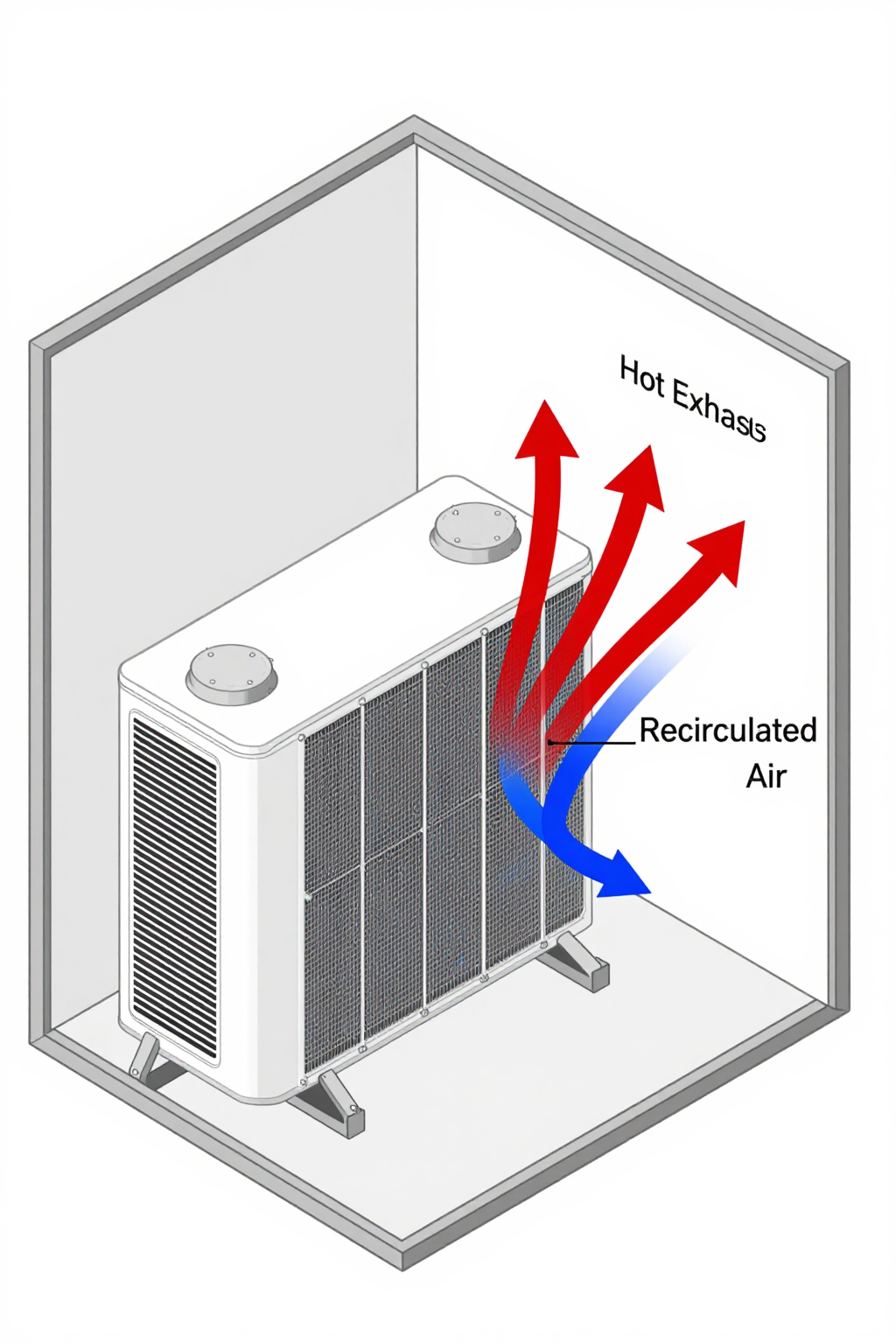
The Silent Killer: Recirculation (The Hot Loop)
Even with a T3 compressor, you can fail if you have Recirculation. This is the #1 installation error in vehicle retrofits.
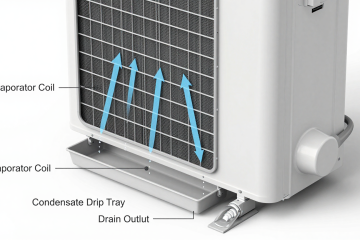
In tightly packed vehicle compartments, engineers often shove the AC unit into a small box. They provide a vent to the exhaust, but the intake is right next to it. What happens is the hot 60°C exhaust air hits the wall, bounces back, and gets sucked right into the intake. This is called “short-cycling.”
When this happens, the condenser is trying to reject heat into 60°C air, not 45°C ambient air. The head pressure skyrockets instantly. The compressor draws massive current, the inverter overheats, and the system shuts down.
Case Study: The Mining Loader Retrofit
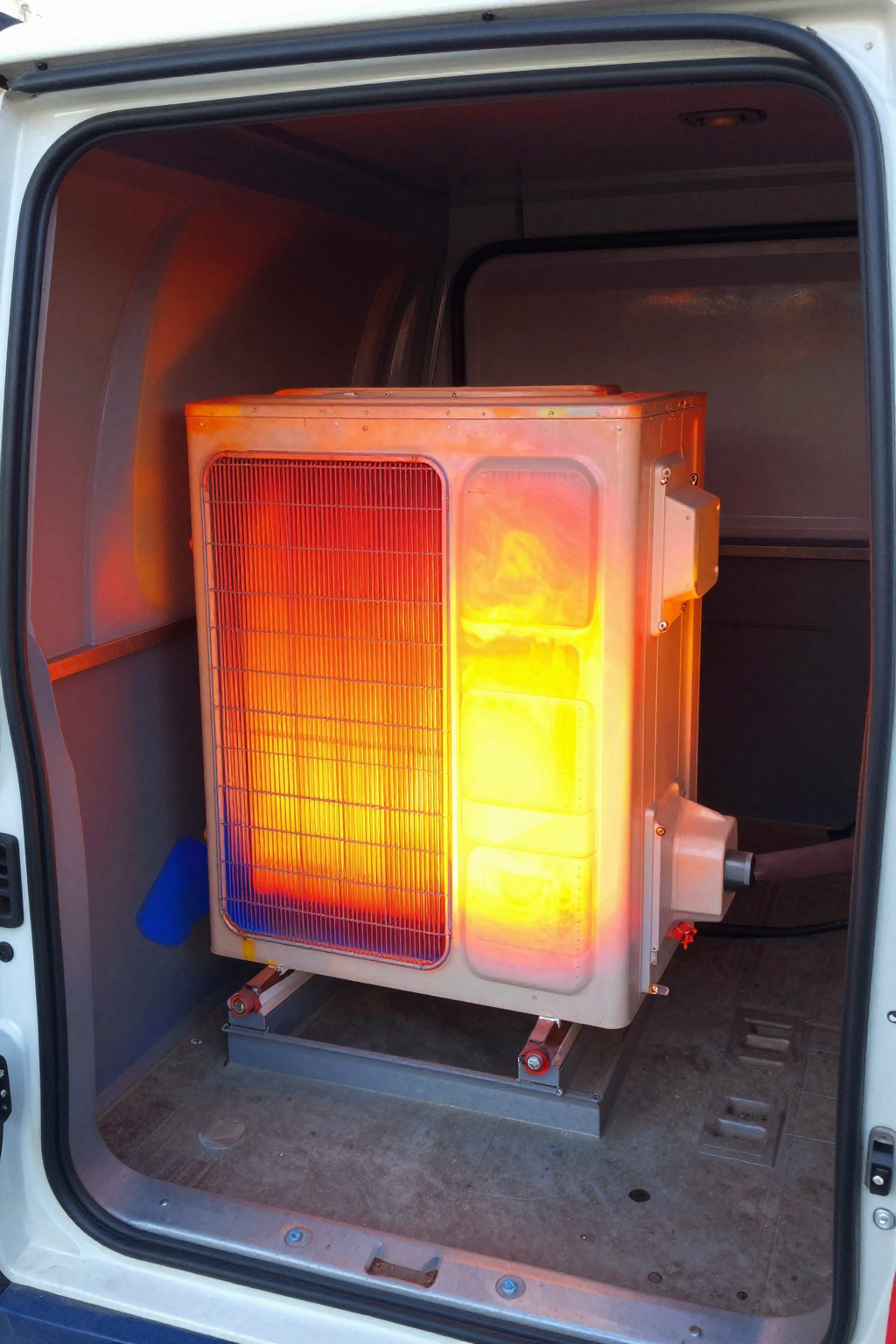
A client installed a generic portable AC inside the engine bay of a loader. The unit tripped every 20 minutes.
The Diagnosis: They had ducted the cold air beautifully into the cabin, but they left the condenser intake/exhaust open inside the hot engine bay. The unit was trying to breathe 60°C engine air.
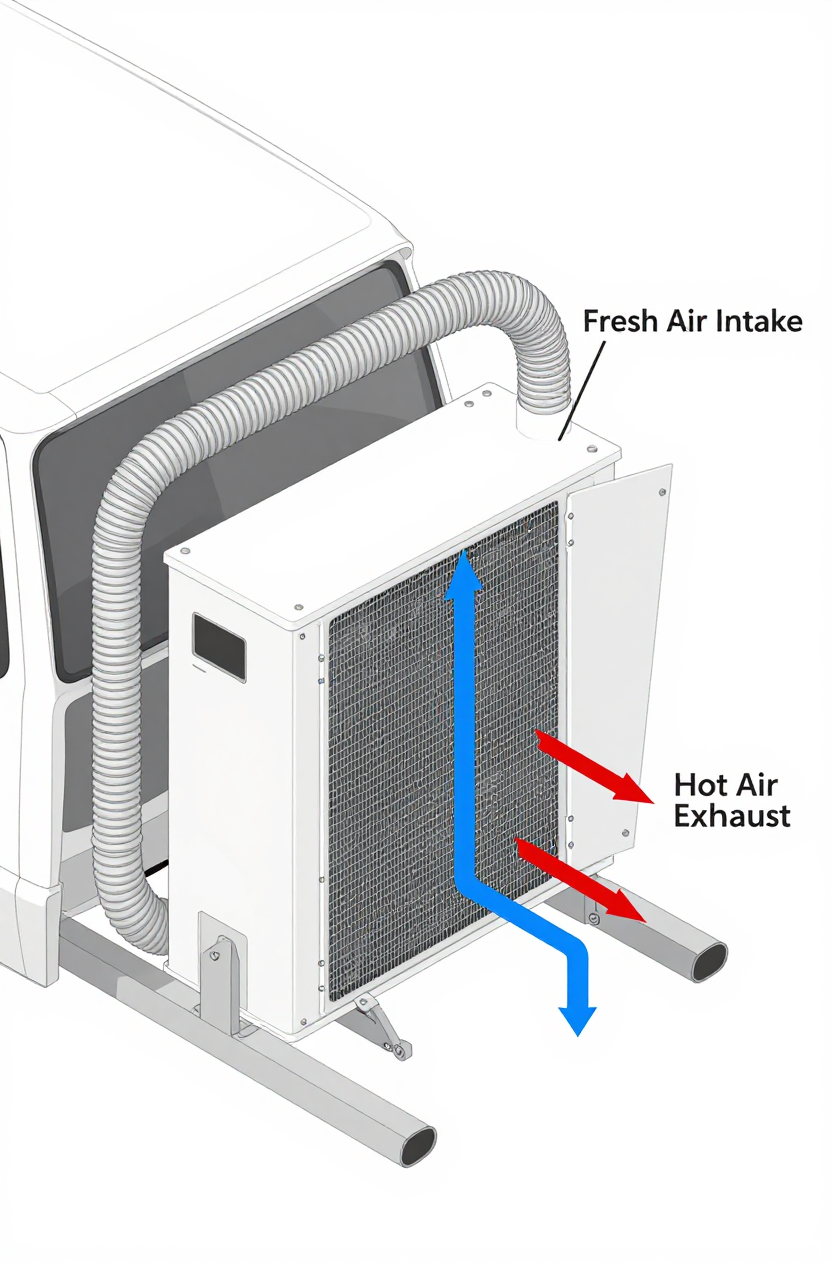
The Fix: We switched them to a Arctic-Tek DV1920E-AC (24V DC Aircon) with a ducted condenser intake. We ran a flex hose to pull fresh ambient air from outside the engine bay. The head pressure dropped by 40%, and the unit ran continuously through the shift.
Installation Guide: Designing a Separation Plenum
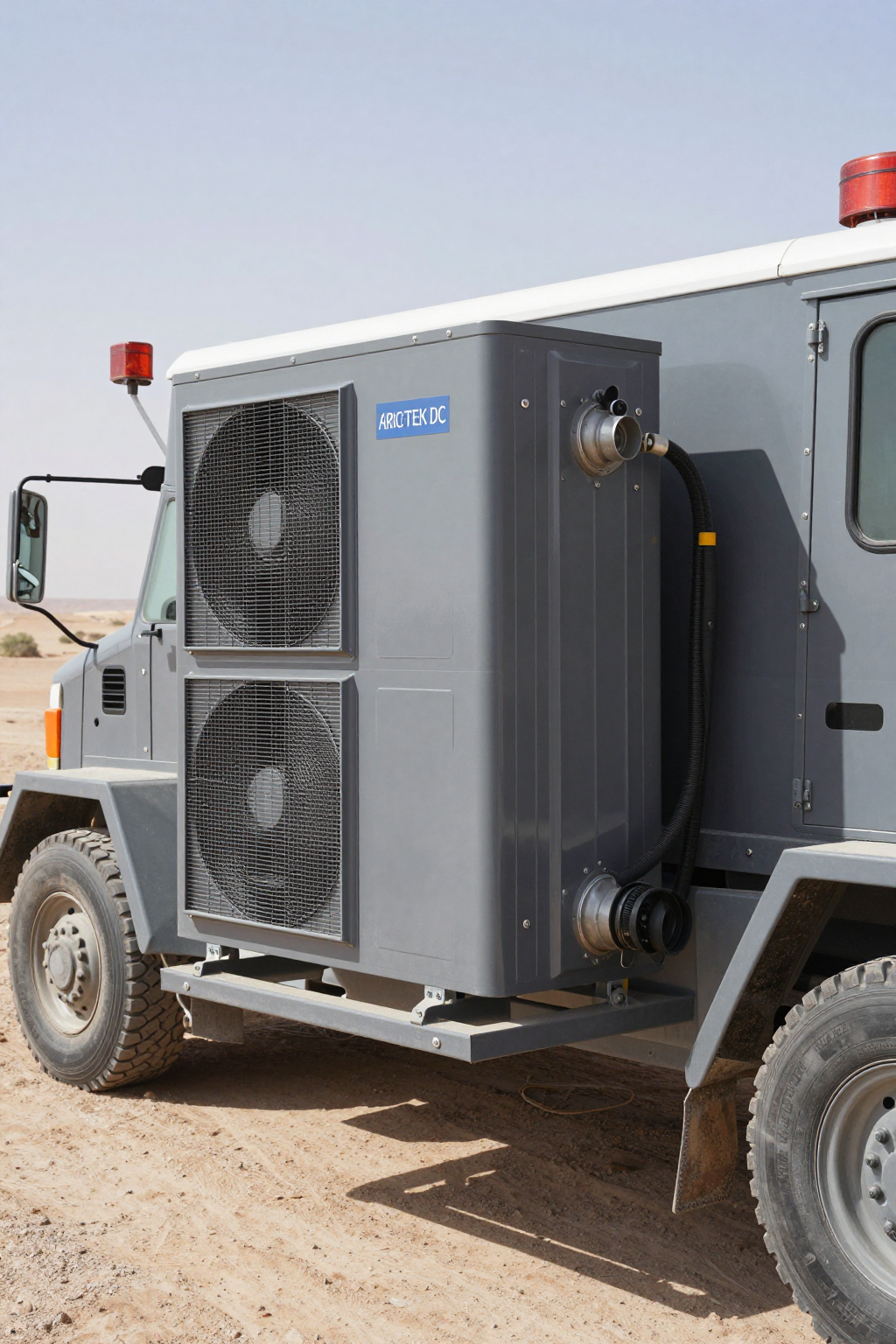
To guarantee performance in high ambient conditions, you must build a Negative Pressure Plenum.
- Seal the Face: Use high-density foam tape to seal the gap between the AC unit’s condenser face and the vehicle wall.
- Separate Intake/Exhaust: Ensure the hot air exhaust is blown at least 50cm away from the intake, or use a deflector shield.
- Check Static Pressure: If adding ducting, ensure the fan has enough static pressure (Pa). Arctic-Tek units use high-static centrifugal fans, not weak axial fans, allowing for up to 3 meters of ducting.
FAQ: Troubleshooting High Temp Failures
1. Why does my AC work only at night?
This confirms it is a High Pressure Cut-out. At night, the ambient temp drops, lowering the head pressure below the 350 psi safety limit. It proves your refrigerant charge is likely fine, but your heat rejection is insufficient.
2. Can I spray water on the condenser to cool it down?
This is called “adiabatic cooling.” While it works temporarily to drop pressure, it causes rapid corrosion of the aluminum fins and deposits mineral scale (calcium), which eventually blocks airflow permanently. We do not recommend it for long-term use.
3. How do I know if I have a T1 or T3 unit?
Check the data plate. T3 units will explicitly state “Max Ambient: 52°C” or “Tropical”. If it doesn’t say it, it’s likely T1. Arctic-Tek DC Aircons are T3 standard.
4. What gauge wire should I use for high-temp environments?
Heat increases resistance. A cable that handles 50A at 20°C might get dangerously hot at 50°C. Always upsize your DC cables by one gauge (e.g., use 4 AWG instead of 6 AWG) for engine bay installations to prevent voltage drop.
Conclusion
Don’t blame the refrigerant. Blame the airflow. In high ambient conditions, your installation strategy matters more than the BTU rating. You need a T3 compressor and a zero-recirculation airflow design.
For detailed specs on our high-temp capable units, review the Arctic-Tek DC Air Conditioner Series.
0 条评论