The Energy Budget: Why Power Quality Defines Off-Grid Enclosure Cooling
In the realm of remote industrial infrastructure, the thermal management system is often the single largest consumer of discretionary power. For engineers designing off-grid systems—whether for telecom towers, remote monitoring stations, or mobile medical units—the challenge is rarely just about removing heat. It is about removing heat without bankrupting the energy budget. The selection of an off-grid enclosure cooling solution is, at its core, a power quality decision.
When a cooling system operates on a finite energy source, such as a battery bank charged by solar arrays or diesel generators, the electrical behavior of the compressor becomes as critical as its cooling capacity. High inrush currents, conversion losses from inverters, and voltage instability can degrade the reliability of the entire site. This article analyzes the engineering logic behind DC-native thermal management and how it preserves power quality in harsh, remote environments.
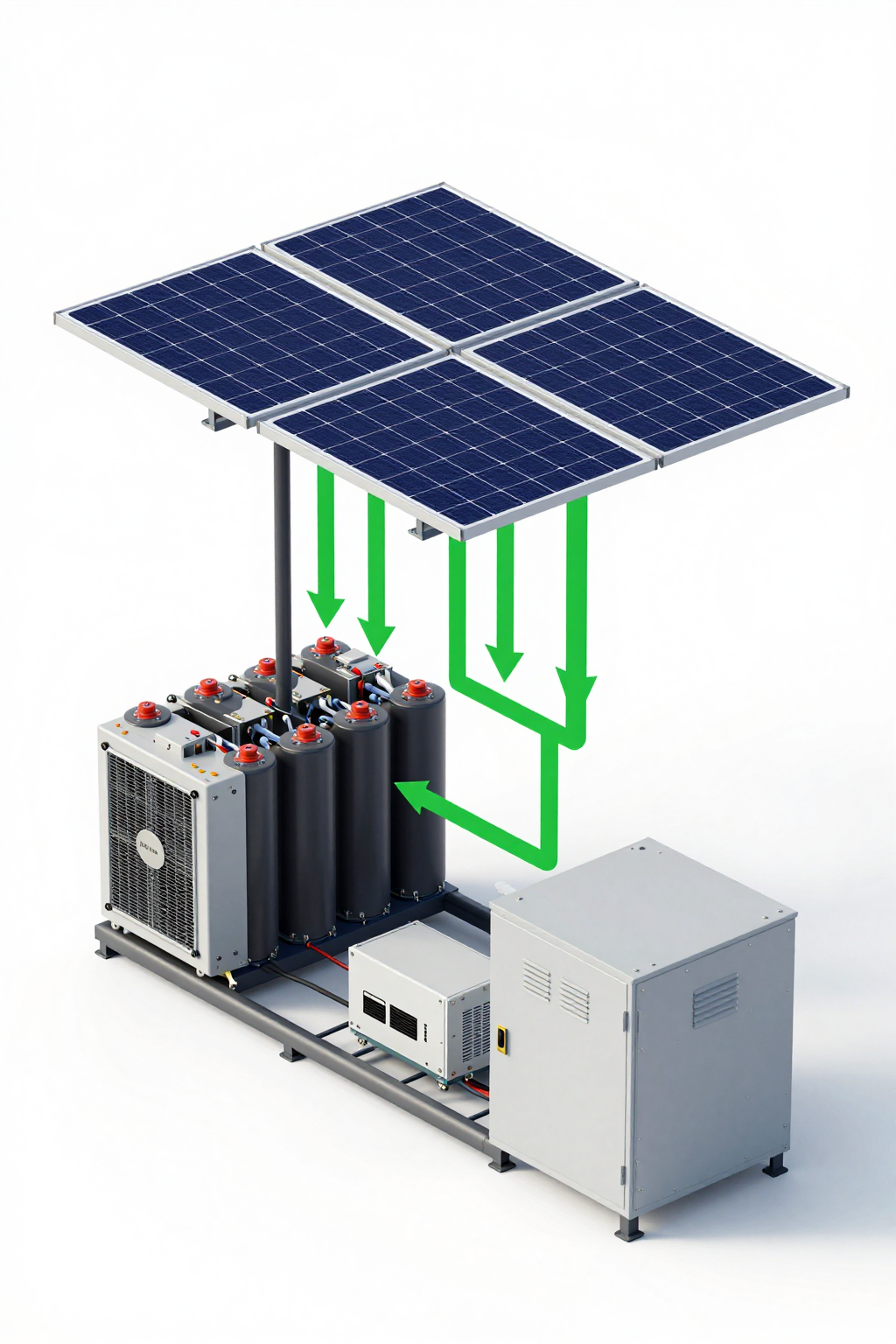
The Strategic Path: From Battery Drain to System Resilience
The traditional approach to cooling remote enclosures often involves adapting standard AC technology to a DC environment. This “integration path” usually results in a chain of inefficiencies that compromise the site’s autonomy. By shifting to a “strategic path” that prioritizes power quality, engineers can eliminate conversion stages, reduce failure points, and extend the operational lifespan of the battery bank.
The goal is not merely to cool the cabinet but to align the thermal load with the electrical realities of the power plant. A power quality cooling system must operate symbiotically with the DC bus, adapting to fluctuating voltages and limited amp-hour reserves without triggering low-voltage disconnects (LVD) during critical startup phases.
Deployment Context: The High Stakes of Remote Power
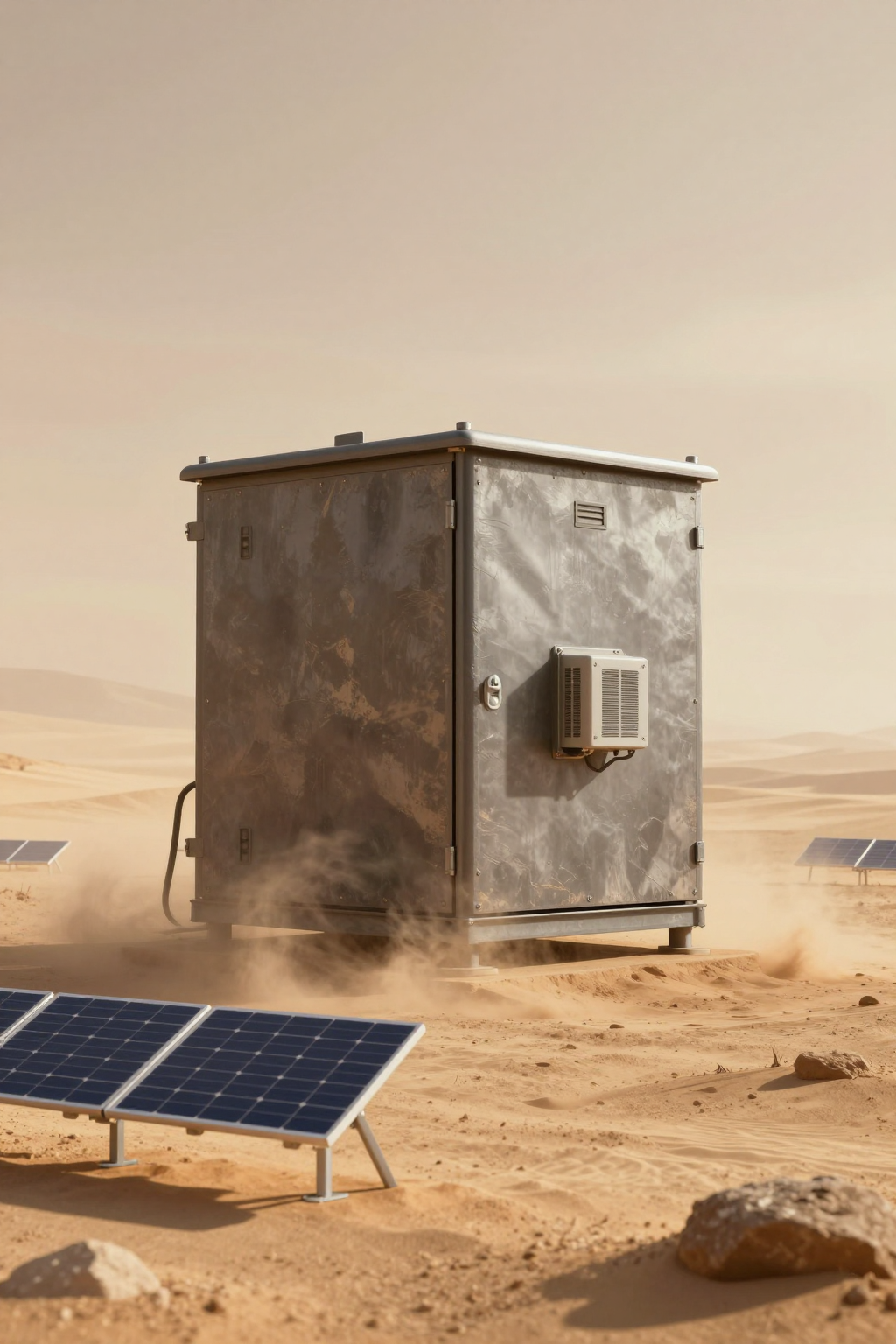
Consider a remote environmental monitoring station in a desert environment. The site runs on a 48V DC battery bank charged by photovoltaics. Ambient temperatures swing from 5°C at night to 45°C during the day. The electronics inside—data loggers, transmitters, and edge processors—generate a constant heat load of 300W.
In this scenario, the cooling system faces two distinct threats:
- Thermal Load: The delta-T (difference between internal and external temperature) peaks exactly when solar generation is highest, but the thermal mass of the enclosure delays the peak internal temperature until late afternoon, when solar input is waning.
- Electrical Load: If the cooling unit demands a massive surge of current to start the compressor (Locked Rotor Amps), it causes a momentary voltage sag on the DC bus. If this sag dips below the LVD threshold of the sensitive electronics, the entire station reboots, causing data loss and downtime.
Technical Friction Points: Where Standard Cooling Fails
The failure of cooling systems in off-grid applications is rarely due to a lack of BTU capacity. It is almost always a failure of electrical compatibility. Standard AC air conditioners, even when powered through an inverter, introduce several friction points that erode system reliability.
1. The Inverter Penalty
Running an AC compressor on a DC battery requires an inverter. Even high-quality pure sine wave inverters operate at 85–92% efficiency. This means for every 100 watts of cooling power, 8 to 15 watts are lost immediately as waste heat—heat that is often generated inside the very enclosure you are trying to cool. This parasitic loss directly reduces the autonomy of the battery bank.
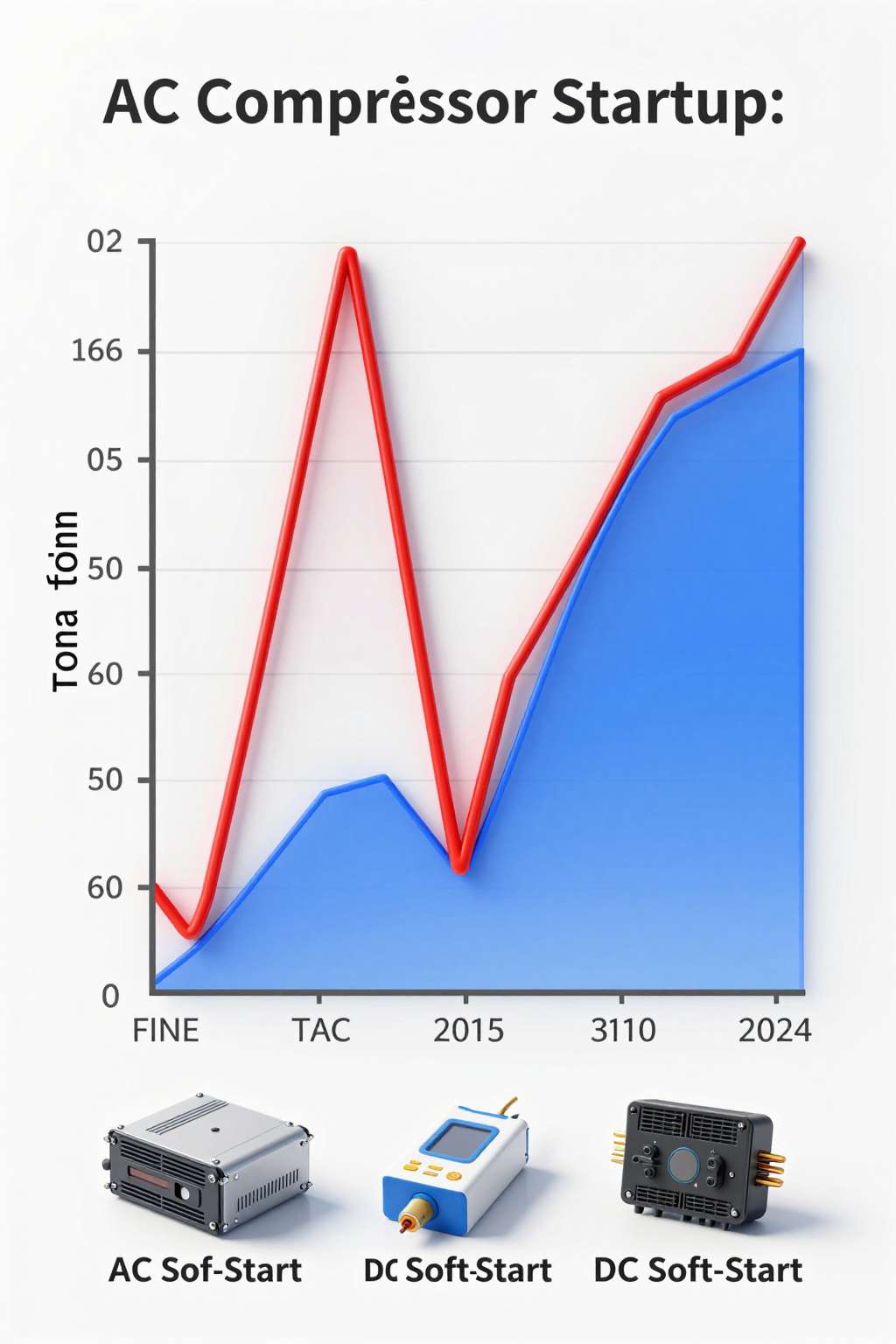
2. Inrush Current and Voltage Sag
Fixed-speed AC compressors require a massive surge of energy to overcome the inertia of the stationary motor. This inrush current can be 5 to 6 times the rated running current. On a stiff grid connection, this is negligible. On a battery bank with internal resistance, this current spike causes an immediate voltage drop (V = IR). In off-grid enclosure cooling, this voltage sag is the primary cause of nuisance tripping and system instability.
3. Cycling Losses
Traditional “bang-bang” control (on/off cycling) is inefficient. The system runs at full power to overcool the space, then shuts off, then restarts. Each restart incurs the inrush penalty described above. In an off-grid scenario, this sawtooth power demand wreaks havoc on battery chemistry and charge controllers.
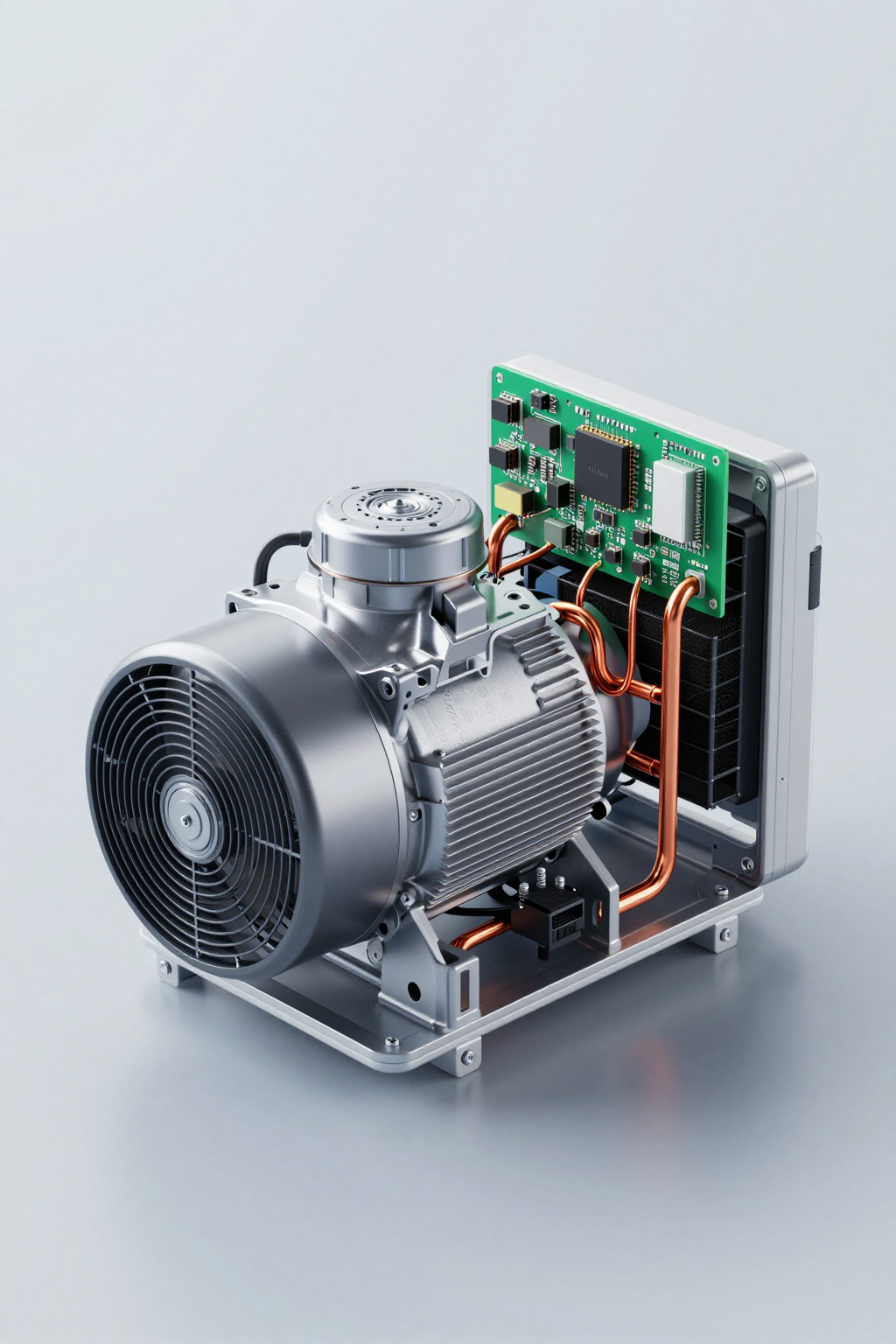
Engineering Fundamentals: The Logic of DC-Native Cooling
To solve the power quality equation, the cooling architecture must be native to the power source. This is where the Micro DC Aircon series fundamentally changes the design paradigm. By utilizing Brushless DC (BLDC) technology, these systems eliminate the need for AC inversion and introduce intelligent load management.
Direct DC Integration
Connecting the cooling unit directly to the 12V, 24V, or 48V DC bus removes the inverter entirely. This reclaims the 10–15% efficiency loss and simplifies the wiring harness. There is no conversion stage to generate heat or introduce harmonic distortion. The energy flows directly from the battery to the compressor driver.
Soft-Start Technology
BLDC motors are electronically commutated. The driver board controls the stator field rotation, allowing the rotor to ramp up speed gradually. Instead of a 60A inrush spike, a DC compressor might ramp from 0A to 5A over several seconds. This “soft start” eliminates voltage sag, ensuring that sensitive telecommunications or monitoring equipment on the same bus sees a stable voltage supply.
Variable Speed Modulation
Unlike fixed-speed systems, an inverter-driven DC compressor can vary its speed (RPM) to match the heat load. Once the setpoint is reached, the compressor slows down to maintain the temperature rather than shutting off completely. This low-speed operation is highly efficient and avoids the electrical trauma of frequent stop-start cycles.
Performance Data & Verified Specs
When specifying an off-grid enclosure cooling solution, engineers must look beyond simple cooling capacity. The electrical characteristics define the suitability for battery-powered applications. The following parameters represent typical performance metrics for the Micro DC Aircon series, which utilizes miniature DC compressors.
| Parameter | Specification Range (Series Dependent) | Engineering Implication |
|---|---|---|
| Nominal Voltage | 12V / 24V / 48V DC | Matches standard battery bank configurations without conversion. |
| Cooling Capacity | 100W – 900W | Scalable for small to mid-sized equipment enclosures. |
| Compressor Type | BLDC Inverter Rotary | Enables variable speed control and soft-start capability. |
| Refrigerant | R134a / R290 / R1234yf | Global compliance and thermodynamic efficiency options. |
| Control Interface | Integrated Driver Board (PCB) | Allows for precise thermal regulation and fault monitoring. |
Note: Specific performance varies by model configuration (e.g., DV1910E-AC vs. DV3220E-AC). Always consult the specific datasheet for the exact current draw at your target ambient temperature.
Power Quality Specifics: Handling the Unstable
Off-grid power is rarely “clean.” Solar input fluctuates with cloud cover; battery voltage drops as the depth of discharge (DoD) increases. A robust power quality cooling system must handle these variances without failure.
Wide Input Voltage Range:
DC compressors are designed to operate within a voltage window rather than a fixed point. For example, a nominal 24V system might operate reliably from 20V to 31V. This ensures cooling continues even when the battery is nearing its discharge limit or during the equalization phase of charging.
Low Voltage Protection:
To protect the battery from deep discharge—which can permanently damage lead-acid and lithium cells—the integrated driver board typically includes a low voltage cut-off. If the battery voltage drops below a critical threshold, the compressor shuts down to preserve the remaining energy for mission-critical loads (like the comms link), automatically restarting once the voltage recovers.
Field Implementation Checklist: Best Practices
Deploying off-grid enclosure cooling requires a holistic view of the mechanical and electrical systems. Use this checklist to ensure a resilient installation.
Electrical Integration
- Cable Sizing: Calculate voltage drop based on the maximum current draw and cable length. Even a 0.5V drop in the cabling can trigger premature low-voltage disconnects in a 12V system.
- Fusing: Install a fast-blow fuse or DC breaker sized at 125% of the maximum rated current (RLA) to protect the wiring harness.
- Direct Bus Connection: Connect the cooling unit as close to the battery terminals or main distribution bus as possible to minimize impedance.
Thermal Design
- Solar Loading: Use sun shields or double-walled enclosures to reduce the solar gain. Reducing the passive heat load directly reduces the power consumption of the active cooling system.
- Airflow Management: Ensure the evaporator intake and exhaust are not obstructed by internal cabling. Short-cycling airflow confuses the thermostat and reduces efficiency.
Maintenance & Monitoring
- Filter Schedules: In dusty environments, a clogged condenser filter increases head pressure, which increases amp draw. Schedule filter checks based on the dust load of the deployment site.
- Condensate Management: Ensure the condensate drain is routed outside the enclosure and includes a trap to prevent dust ingress or insect nesting.
Expert Field FAQ
Q: Can I run a 24V Micro DC Aircon on a 48V telecom site using a step-down converter?
A: While technically possible, it is not recommended. Adding a DC-DC converter introduces another point of failure and efficiency loss (typically 5–10%). It is far better engineering practice to select a DC condensing unit or aircon that matches your native bus voltage (e.g., a 48V model for a 48V site).
Q: How does the system behave during a “cloud edge” effect where solar power spikes and drops rapidly?
A: The battery bank acts as a buffer. However, the wide input voltage range of the DC compressor driver ensures it rides through minor fluctuations. If voltage spikes exceed the maximum rating, the driver’s over-voltage protection will temporarily shut down the unit to prevent damage.
Q: What is the difference between R134a and R290 in terms of power consumption?
A: R290 (Propane) generally offers superior thermodynamic properties, often resulting in slightly higher efficiency (EER) compared to R134a. However, the choice often depends on safety regulations regarding flammable refrigerants in your specific installation region.
Q: Does the soft-start feature eliminate the need for an oversized battery bank?
A: It significantly reduces the requirement. With AC systems, you often have to size the battery and inverter to handle the startup surge (LRA). With DC soft-start, you can size the power system based on the running load (RLA) plus a safety margin, potentially saving significant capital on battery capacity.
Q: Can these units operate in mobile applications, like off-road vehicles?
A: Yes. The rotary compressors used in Micro DC Aircons are inherently resistant to vibration and tilting, making them suitable for mobile off-grid applications where the enclosure is in motion.
Q: How do I calculate the required cooling capacity for an off-grid cabinet?
A: You must sum the internal heat dissipation of the electronics (in Watts) and the heat transfer through the cabinet walls (Solar Load + Ambient Delta-T). In off-grid setups, it is critical not to oversize the unit excessively, as this can lead to short cycling, though inverter-driven units mitigate this penalty.
Conclusion & System Logic
The decision to deploy off-grid enclosure cooling is a decision to manage energy as a finite resource. By moving away from adapted AC solutions and embracing DC-native architectures, engineers can eliminate the inefficiencies of inversion and the instability of inrush currents. The Micro DC Aircon series represents a shift toward a power quality cooling system—one that treats the battery bank with the same importance as the thermal load.
For system integrators, the logic is clear: match the physics of the cooling to the physics of the power source. A direct DC connection, driven by intelligent variable-speed control, provides the resilience required for remote, unmanned operations. When uptime is non-negotiable and power is expensive, the efficiency of the thermal management system becomes the linchpin of the entire site’s reliability.
For specific thermal sizing assistance or to discuss the integration of 12V, 24V, or 48V cooling solutions into your off-grid project, consult the Arctic-tek engineering team.
0 条评论