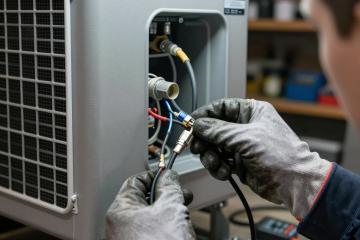
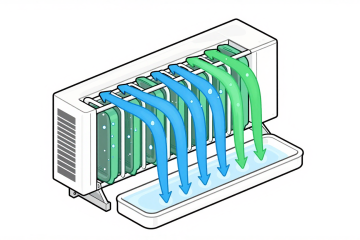
The “Mystery Puddle” ScenarioIt’s a humid night in Florida. You are running your RigidChill LC2810E-AC to sleep comfortably after a long day on the road. The cool air is flowing, and you drift off. But at 3 AM, you step out of bed into a cold puddle of water.Panic sets in—did the unit break? Is the refrigerant leaking?Relax. The unit is likely working perfectly. In fact, it is working too well. The puddle is simply evidence that your 12V portable air conditioner is actively dehumidifying the air. The failure is not the machine; it is the condensate management strategy. Understanding how to handle this water by-product is essential for any successful van life AC installation. https://pub-129b35160aa84022804dc3421e56971a.r2.dev/blog-images/troubleshooting-rigidchill-lc2810e-ac-drainage-2.jpg ” alt=”Overflowing condensate catch bottle on a van floor” class=”blog-image” loading=”lazy”>The Physics: Why Your AC “Sweats”A compressor AC cools air by passing it over a cold evaporator coil. When humid air hits the cold coil, moisture condenses into liquid water (just like a cold beer can on a hot day).This process provides Latent Cooling. In high-humidity environments, simply lowering the air temperature is not enough for comfort. You must also lower the humidity so your body can cool itself naturally. The LC2810E-AC—originally designed for cooling sensitive laser and semiconductor equipment—is engineered to aggressively pull moisture to protect electronics (and you) from humidity.Calculating the Water VolumeThe volume of water generated depends on the relative humidity (RH) and the dew point. In high humidity conditions (e.g., 30°C / 80% RH), this compact unit can pull 0.5 to 0.8 liters of water per hour out of the cabin air. Over an 8-hour night, that is 4-6 liters (over 1.5 gallons) of water. If your internal drip tray only holds 0.5L, it will overflow in less than an hour if not drained properly.The Fix: Gravity Drainage vs. PumpsMost portable DC units, including the LC2810E-AC, rely on gravity drainage. This is simple, energy-efficient, and reliable, but it requires strict adherence to geometry.1. The Gravity Rule (Downhill Only)Water flows downhill. The drain hose must have a continuous downward slope from the unit to the outlet.Common Failure: Placing the AC on the van floor and trying to run the hose out a window above the unit. Water will simply back up, fill the internal tray, and overflow onto your floor.The Fix: Raise the AC unit on a platform, wheel well box, or drawer system so the drain port is physically higher than the exit point.Pro Tip for Van Lifers: Many professional installers drill a dedicated floor drain hole through the van chassis. If you do this, ensure you use a rubber grommet to protect the hose and apply rust inhibitor to the bare metal edge.2. Active Pumping (The Upward Solution)If you absolutely must place the AC on the floor and drain out a window (fighting gravity), you need a Condensate Pump. Small 12V mini-pumps (like the Little Giant series) can be triggered by a float switch to pump the water up and out.Note: Given the LC2810E-AC compact nature, external pumps are often the best solution for complex installs. https://pub-129b35160aa84022804dc3421e56971a.r2.dev/blog-images/troubleshooting-rigidchill-lc2810e-ac-drainage-3.jpg ” alt=”Diagram showing correct vs incorrect gravity drain slope” class=”blog-image” loading=”lazy”>Advanced Integration: Gray Water RoutingInstead of dumping water on the ground—which can be frowned upon in paved parking lots or sensitive campsites—consider routing your condensate drain into your sink gray water tank. This requires a Y fitting on your sink drain line. Crucial: You must install a check valve or a P-trap to prevent gray water smells from traveling back up the AC drain hose and into your sleeping area.Why the LC2810E-AC is DifferentUnlike cheap consumer units, the RigidChill LC2810E-AC is built with a rugged design meant for critical applications like mobile medical cabinets and laser systems.Vibration Resistance: Designed to withstand the bumps of the road (or a mobile lab).Precision: It manages heat loads with industrial efficiency, meaning it creates condensate faster and more reliably than weaker units. This is a feature, not a bug.Maintenance: The Mold FactorStanding water promotes life. If condensate is allowed to pool in a loop of the hose (creating an unintentional P-trap), it will eventually grow algae or mold slime.Best Practice:1. Monthly Flush: Pour a mixture of warm water and a little vinegar down the drain line.2. Check Flow: Ensure the hose is clear and flows freely. https://pub-129b35160aa84022804dc3421e56971a.r2.dev/blog-images/troubleshooting-rigidchill-lc2810e-ac-drainage-4.jpg ” alt=”Installation of a 12V condensate pump for upward drainage” class=”blog-image” loading=”lazy”>ConclusionA wet floor is often a sign of a powerful AC doing its job correctly—just with nowhere for the water to go. By respecting the physics of gravity and planning your drainage route, you can keep your RigidChill LC2810E-AC running dry all night.Don’t let condensate catch you off guard. Plan your drainage before you sleep.Frequently Asked QuestionsQ: Does the LC2810E-AC have an auto-shutoff for water? A: No, it is designed for continuous duty industrial/mobile cooling. You must provide a continuous drain path. Physics keeps working, and water keeps flowing.Q: Can I drink the condensate water? A: No. While it is technically distilled, it has passed over aluminum coils and internal components that may harbor bacteria. Use it for washing gear, but do not drink it.Q: What makes this unit better for vans than a standard window AC? A: The LC2810E-AC is a true DC system with a miniature compressor, meaning no inverter is needed (saving power). Plus, its ruggedized chassis is built to survive constant road vibration, unlike household window units that can crack or leak refrigerant after a few thousand miles.Q: Is it okay to let the water drip onto the ground outside? A: In most wild camping spots, yes. However, in paved parking lots, a constant puddle is considered gray water discharge. Use a catch bottle or route to your gray tank.Q: Why is water leaking from the FRONT of the unit? A: This usually means the unit is tilted forward (away from the drain) or the rear drain is clogged. Ensure the unit is level or slightly tilted back to help gravity do its work.
分类: 未分类
0 条评论