The “Mystery Puddle” Scenario
It’s a humid night in Florida. You are running your RigidChill PC19Z to sleep comfortably. The cool air is flowing, and you drift off. But at 3 AM, you step out of bed into a cold puddle of water. Panic sets in—did the unit break? Is the refrigerant leaking?
Relax. The unit is likely working perfectly. In fact, it’s working too well. The puddle is simply evidence that the AC is actively dehumidifying the air. The failure isn’t the machine; it’s the portable DC AC condensate management strategy. Understanding how to handle this water by-product is essential for any van lifer.
The Physics: Calculating the Water Volume
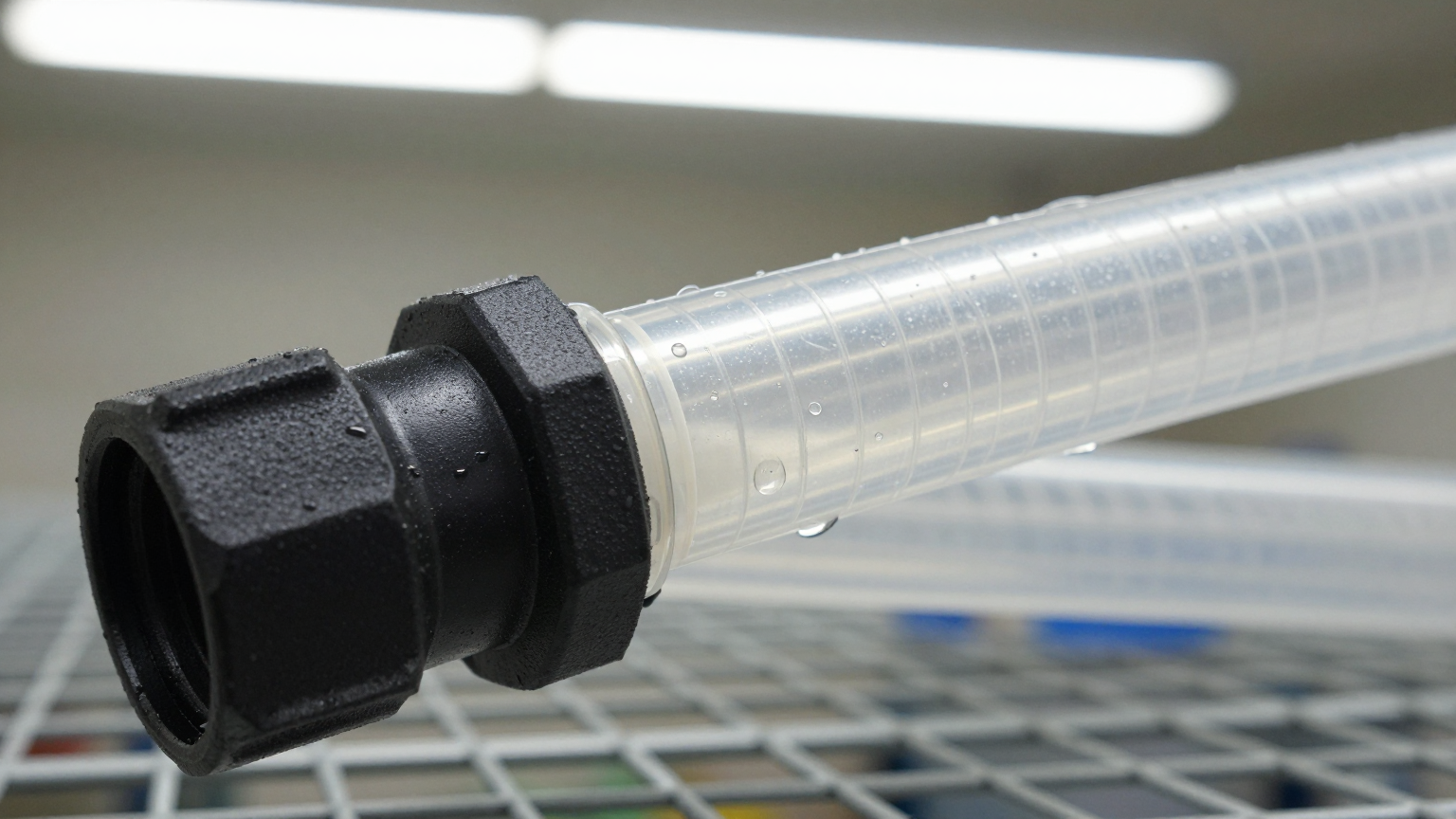
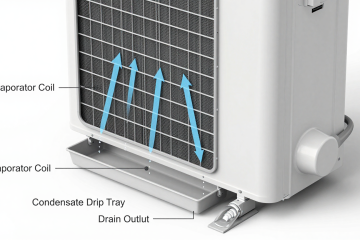
A compressor AC cools air by passing it over a cold evaporator coil. When humid air hits the cold coil, moisture condenses into liquid water (just like a cold beer can). The volume of water generated depends on the relative humidity (RH) and the dew point.
In high humidity conditions (e.g., 30°C / 80% RH), a small 2000-3000 BTU unit can pull 0.5 to 0.8 liters of water per hour out of the air. Over an 8-hour night, that is 4-6 liters (over a gallon) of water. If your internal drip tray only holds 0.5L, it will overflow in less than an hour if not drained properly.
The Fix: Gravity Drainage vs. Pumps
Most portable DC units, including the PC19Z, rely on gravity drainage. This is simple and reliable, but it requires strict adherence to geometry.
1. The Gravity Rule
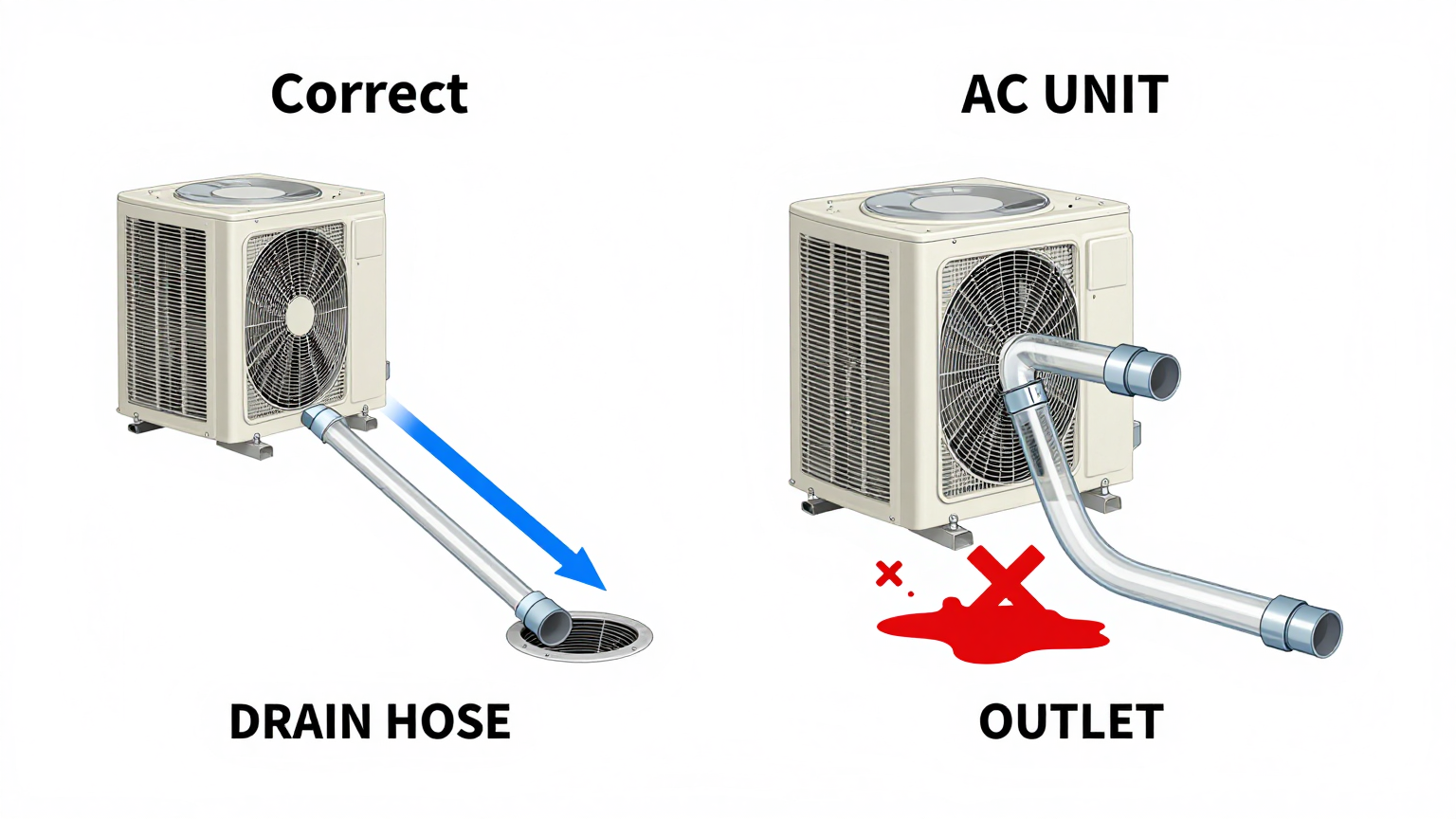
Water flows downhill. The drain hose must have a continuous downward slope from the unit to the outlet.
Common Failure: If you put the AC on the floor and try to run the hose out a window above the unit, water will simply flow back into the unit and overflow.
Solution: Raise the AC unit on a platform or box so the drain port is higher than the exit point. Or, drill a floor drain hole through the van chassis.
2. Active Pumping (The Upward Solution)
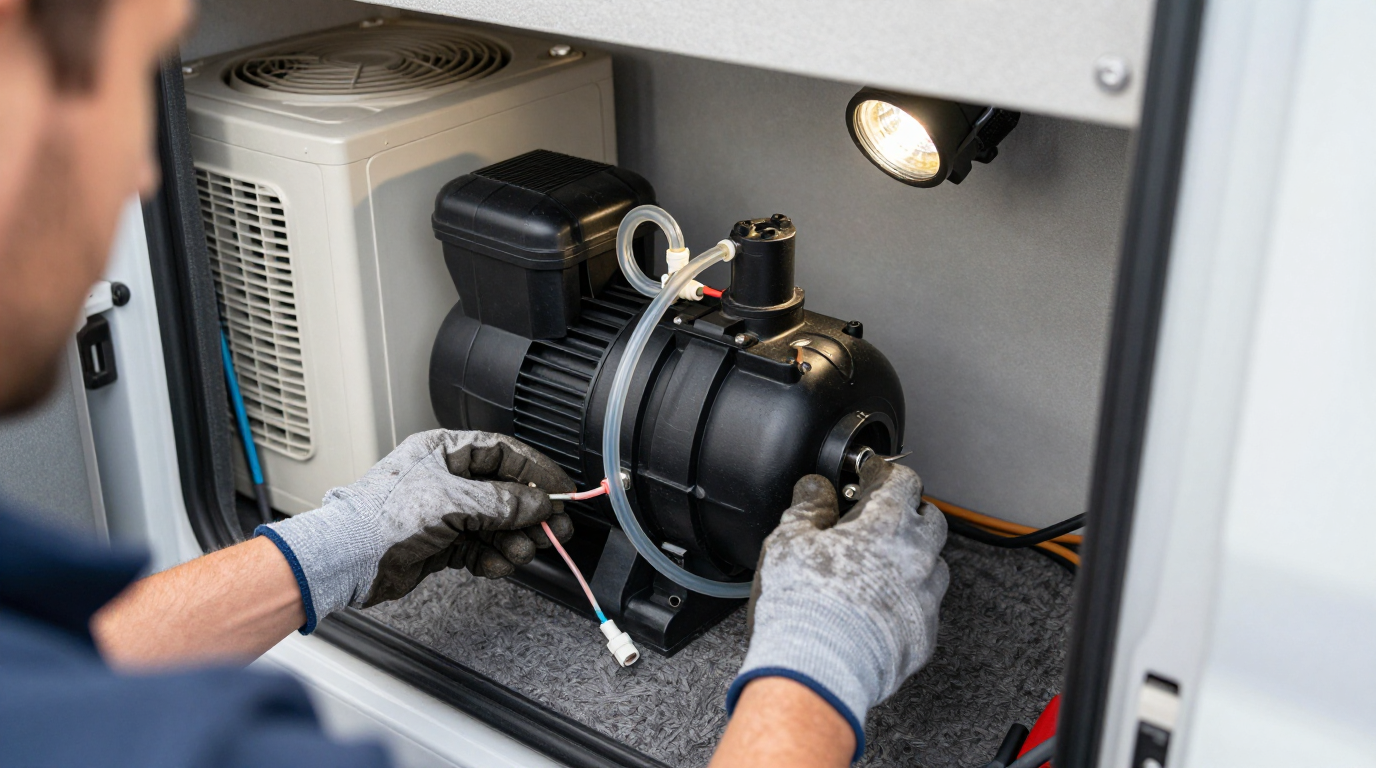
If you absolutely must place the AC on the floor and drain out a window, you need a Condensate Pump. Small 12V mini-pumps (like the Little Giant series) can be triggered by a float switch to pump the water up and out. RigidChill offers optional pump kits for difficult installations.
Maintenance: The Mold Factor
Standing water promotes life. If condensate is allowed to pool in a loop of the hose (a “P-trap”), it will eventually grow algae or mold slime. This biological sludge can block the drain port, causing an overflow even if the hose angle is correct. This is especially common in humid environments like Florida or the PNW.
Best Practice: Once a month, flush the drain line with a mixture of warm water and a little vinegar to kill any algae buildup. Ensure the hose is clear and flows freely. If you use a catch bottle, empty and sanitize it daily.
Integration Checklist
- Tilt Angle: Ensure the unit is level. If it tilts backward (away from the drain), water might pool in the back of the chassis.
- Hose Kinks: Check the clear vinyl drain tube for kinks. A pinched hose is a plugged hose.
- Seal Check: If you are manually emptying the internal tray (not recommended for humid areas), ensure the rubber drain plug is seated tightly.
- Venting: Ensure the exhaust hose is not kinked, as high head pressure can sometimes affect condensate flow.
Conclusion
A wet floor is a sign of a powerful AC doing its job. By respecting the physics of gravity and planning your drainage route, you can keep your PC19Z Portable AC running dry all night.
Don’t let condensate catch you off guard. Plan your drainage before you sleep.
Frequently Asked Questions
Q: Does the PC19Z have an auto-shutoff for water?
A: It typically has a “Tank Full” sensor if using an internal tank, but for continuous drainage via hose, there is no shutoff—physics keeps working, and water keeps flowing.
Q: Can I drink the condensate water?
A: No. While it is technically distilled, it has passed over aluminum coils and plastic trays that may harbor bacteria or manufacturing oils. Use it for washing gear, but not for drinking.
0 条评论