The Hidden Risk in Outdoor Enclosures: Panel Mount DC Aircon Leak Prevention
For OEM engineers and system integrators designing outdoor infrastructure, the focus is almost always on the active components: the lithium battery density, the inverter efficiency, or the cooling capacity of the thermal management system. However, in harsh, remote, or mobile deployments, the most common point of failure is rarely the compressor or the controller—it is the interface between the cooling unit and the cabinet. Achieving reliable panel mount DC aircon leak prevention is not just about selecting a unit with the right IP rating; it is about mastering the mechanical dynamics of the enclosure cutout under extreme thermal cycling.
When an outdoor cabinet sits in the desert sun, internal temperatures rise, increasing internal pressure. At night, the temperature plummets, creating a vacuum effect. This “breathing” cycle exerts repetitive stress on gaskets, seals, and fasteners. Over time, this leads to gasket fatigue, compression set, and eventually, a breach in the sealing integrity. Once the seal is compromised, dust, humidity, and salt spray bypass the filter and the closed-loop system entirely, attacking sensitive electronics directly.
This article examines the forensic mechanics of seal failure in panel-mounted cooling applications. We will move beyond simple NEMA/IP definitions to discuss the physical realities of mounting Micro DC Aircon units on varying surfaces, the impact of coefficient of thermal expansion (CTE) mismatches, and the practical steps required to ensure long-term ingress protection.
Deployment Context: Where Sealing Matters Most
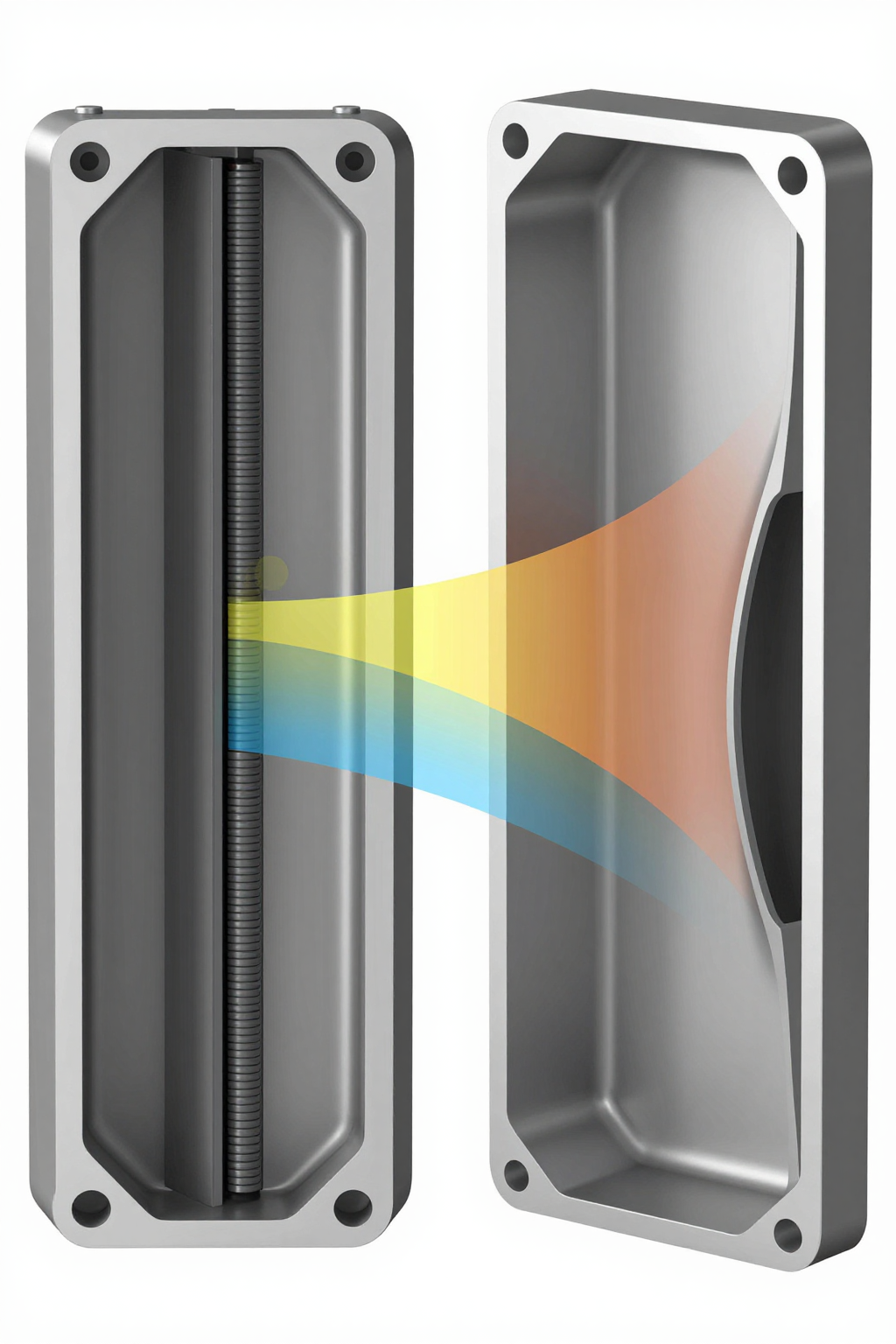
To understand the gravity of panel mount DC aircon leak prevention, we must look at the environments where these systems operate. In controlled data centers, a small air leak is an efficiency loss. In the field, it is a reliability catastrophe.
Scenario A: The Desert Telecom Repeater
Consider a remote telecom cabinet powered by solar and battery storage in a high-desert environment. The ambient temperature fluctuates from 5°C at night to 45°C during the day. The cabinet is exposed to direct solar loading, pushing surface temperatures even higher.
Constraints:
- Thermal Shock: Rapid heating and cooling cycles cause the steel cabinet and the cooling unit’s mounting flange to expand and contract.
- Dust Load: Fine particulate matter (silica dust) is constant. Any gap in the seal acts as a vacuum intake during the cooling phase.
- Maintenance Interval: The site is visited only once every 6–12 months. A leak that develops in month 2 results in 10 months of dust accumulation.
Scenario B: Coastal Sensor Station
A monitoring station mounted on a pier or offshore platform faces a different enemy: salt fog. The corrosive atmosphere searches for any weakness in the coating or sealing.
Constraints:
- Electrochemical Attack: Saltwater is highly conductive. If the gasket absorbs moisture or if the seal is imperfect, galvanic corrosion can accelerate between the mounting studs and the cabinet wall.
- Humidity Ingress: High ambient humidity means that any air exchange brings moisture inside. If the internal temperature drops below the dew point, condensation forms on PCBs.
- Wind-Driven Rain: Storms create hydrostatic pressure against the seal, testing the compression uniformity of the installation.
Decision Matrix: Cooling Technology & Sealing Integrity
Choosing the right cooling architecture is the first step in leak prevention. While the mounting interface is critical for all panel-mount devices, the type of cooling system dictates the pressure dynamics and ingress risks. The table below compares common options based on their inherent sealing characteristics and suitability for harsh environments.
| Criteria | Filter Fans (Open Loop) | Thermoelectric (TEC/Peltier) | Micro DC Aircon (Compressor) |
|---|---|---|---|
| Sealing Architecture | Open Loop (Intentional Air Exchange) | Closed Loop (Solid State) | Closed Loop (Vapor Compression) |
| Ingress Risk Source | Filter saturation, bypass leaks | Gasket fatigue, heat sink clogging | Gasket fatigue, condensate drain |
| Sub-Ambient Cooling | Impossible (Always > Ambient) | Yes (Limited Capacity) | Yes (High Capacity) |
| Dust/Salt Tolerance | Low (Requires frequent filter changes) | High (No moving parts externally) | High (Sealed refrigerant loop) |
| Pressure Dynamics | Positive/Negative pressure created by fans | Passive pressure changes only | Passive pressure changes only |
| Typical Capacity | Depends on airflow (CFM) | 50W – 300W | 100W – 900W (Series Baseline) |
Implication: For harsh environments, open-loop fans are often disqualified because they cannot prevent fine dust or humidity ingress, regardless of gasket quality. Closed-loop systems like the Micro DC Aircon are superior, but they shift the entire burden of ingress protection to the mounting seal and cable glands.
Quick Selection Rules for Sealing Reliability
- Rule 1: If the ambient air contains conductive dust or salt, you must use a closed-loop system (Compressor or TEC). Fans are not defensible.
- Rule 2: If the temperature difference (Delta T) between day and night exceeds 20°C, use a gasket material with high recovery properties (e.g., EPDM or Neoprene) rather than simple foam tape.
- Rule 3: If the cabinet walls are thin (flexible), use a backing plate or stiffener ring to ensure uniform compression of the aircon flange.
- Rule 4: If sub-ambient cooling is required to keep batteries within optimal range, ensure the enclosure is insulated to prevent external sweating, which can mimic a leak.
- Rule 5: If the cooling unit is heavy, do not rely solely on the flange gasket for mechanical support; use support brackets to prevent shear stress on the seal.
Failure Modes: The Unseen Enemies of Uptime
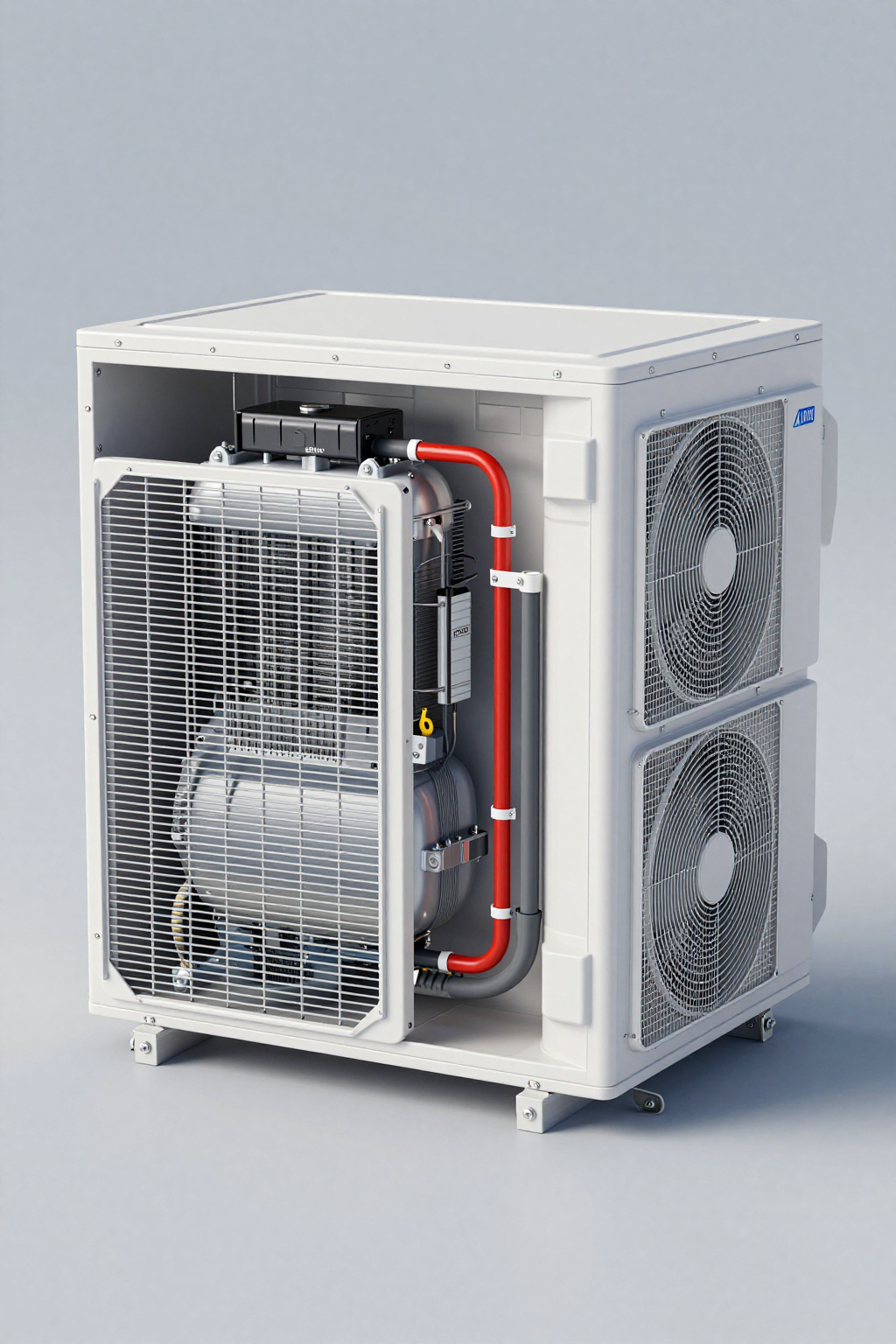
When we investigate “leaks” in the field, we rarely find a hole in the cabinet. Instead, we find a failure of the interface. Here are the specific mechanisms that undermine panel mount DC aircon leak prevention.
1. Compression Set and Gasket Relaxation
All elastomeric gaskets lose their ability to push back over time. This is known as “compression set.” If a gasket is compressed by 30% during installation, it may permanently deform to that shape after months of thermal cycling. When the cabinet contracts during a cold snap, the gap may widen slightly. If the gasket has lost its rebound elasticity, a micro-gap forms, allowing moisture ingress.
2. CTE Mismatch (Coefficient of Thermal Expansion)
The cooling unit and the cabinet are often made of different materials. A steel cabinet and an aluminum or plastic aircon housing expand at different rates.
Example: As the sun heats the equipment, the plastic housing might expand more than the steel cutout. This creates shear stress across the gasket face. Over thousands of cycles, this scrubbing action can tear the gasket skin or loosen the mounting nuts, reducing compression force.
3. The “Pumping” Effect
Sealed enclosures are barometers. According to the Ideal Gas Law, as temperature rises, internal pressure rises. If the cabinet is perfectly sealed, this pressure stresses the weakest points—usually the large flat gasket of the air conditioner. Conversely, rapid cooling (e.g., a rainstorm hitting a hot cabinet) creates a sudden vacuum. This negative pressure sucks water standing on the gasket interface directly into the cabinet if the seal is not perfect.
4. Flange Deformation
Overtightening is as dangerous as undertightening. If an installer uses an impact driver on the mounting studs, the flange of the cooling unit or the cabinet wall can bow between the fasteners. This bowing creates gaps where the gasket is barely compressed, providing a path for water entry.
Engineering Fundamentals: Why Closed-Loop Matters
To solve these issues, we must understand the physics of the Micro DC Aircon. Unlike a fan, which equalizes internal and external pressure by moving air, a DC air conditioner recirculates the same internal air. It removes heat via a refrigerant cycle (vapor compression).
The evaporator coil absorbs heat inside the cabinet, boiling the refrigerant (e.g., R134a). The compressor pumps this gas to the condenser, where it rejects heat to the outside air. Because there is no air exchange, the system relies entirely on the thermal conductivity of the evaporator and the integrity of the enclosure shell.
Delta T and Heat Rejection: The ability of the system to reject heat depends on the temperature difference between the condenser coil and the ambient air. In extreme heat, the system works harder, creating more vibration and internal pressure. This reinforces the need for a robust mechanical interface. A rigid mounting system dampens vibration that would otherwise propagate to the gasket, preventing the “walking” of fasteners.
Sealing Reality Clause: Closed-loop designs avoid air exchange, but overall ingress protection still depends on gasket integrity, cable glands, and installation quality.
Performance Data & Verified Specs
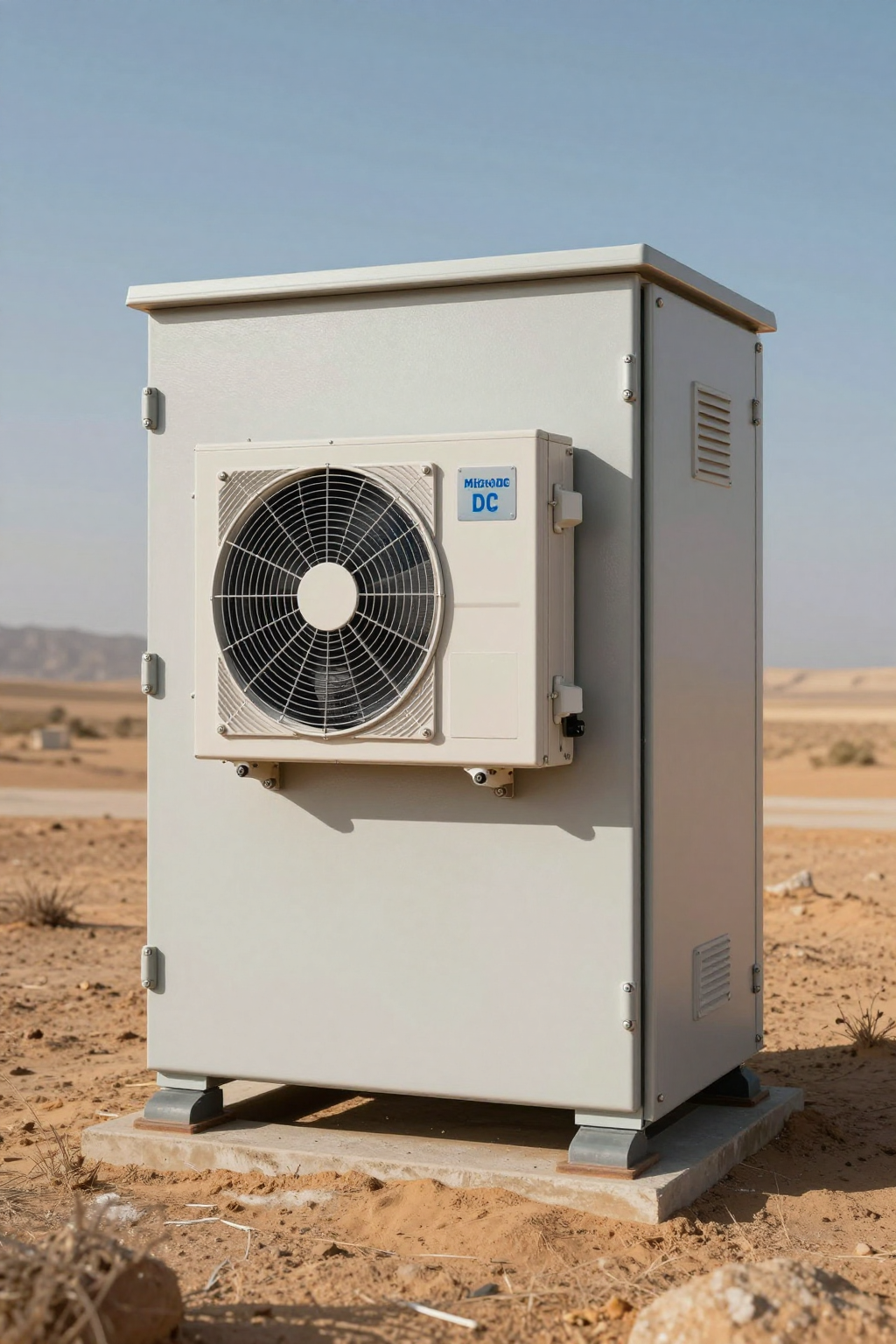
When selecting a cooling unit for a sealed enclosure, the physical footprint and cooling capacity must align with the cabinet’s thermal load. The Arctic-tek Micro DC Aircon series is designed for compact, panel-mount integration. The following specifications highlight the parameters relevant to mechanical integration and power planning.
| Model (Pro Series) | Voltage | Nominal Cooling Capacity | Refrigerant | Compressor Type |
|---|---|---|---|---|
| DV1910E-AC | 12V DC | 450W | R134a | BLDC Inverter Rotary |
| DV1920E-AC | 24V DC | 450W | R134a | BLDC Inverter Rotary |
| DV1930E-AC | 48V DC | 450W | R134a | BLDC Inverter Rotary |
| DV3220E-AC | 24V DC | 550W | R134a | BLDC Inverter Rotary |
Note on Capacity: The nominal cooling capacity (e.g., 450W) is typically measured at standard test conditions (often L35/L35). In high ambient conditions, the capacity may derate slightly, while power consumption increases. Engineers must account for this when sizing the battery bank and solar array.
The use of R134a is standard for these applications due to its stability and reasonable operating pressures, which reduces the risk of refrigerant leaks within the unit itself. The BLDC inverter rotary compressor allows for variable speed operation. This means the unit can soft-start, reducing the inrush current spike that often destabilizes battery buses, and run at lower speeds to maintain temperature, reducing vibration and thermal cycling stress on the mounting gasket.
Field Implementation Checklist
Even the best Micro DC Aircon will fail if installed poorly. Use this checklist to ensure panel mount DC aircon leak prevention during assembly.
Mechanical Preparation
- Cutout Accuracy: Ensure the cutout dimensions match the template exactly. Oversized cutouts reduce the gasket sealing surface area.
- Surface Flatness: Check the cabinet wall for warping. If the steel is thin (e.g., < 1.5mm), reinforce the opening with a stiffener frame to prevent bowing between studs.
- Deburring: Remove all sharp edges and burrs from the cutout. A sharp edge can slice the gasket during installation or under vibration.
- Surface Cleaning: Clean the mounting surface with isopropyl alcohol to remove oil, grease, or dust before applying the gasket.
Installation & Torque
- Gasket Positioning: Ensure the gasket is continuous. If there is a seam, it should be at the bottom of the unit, though a seamless die-cut gasket is preferred.
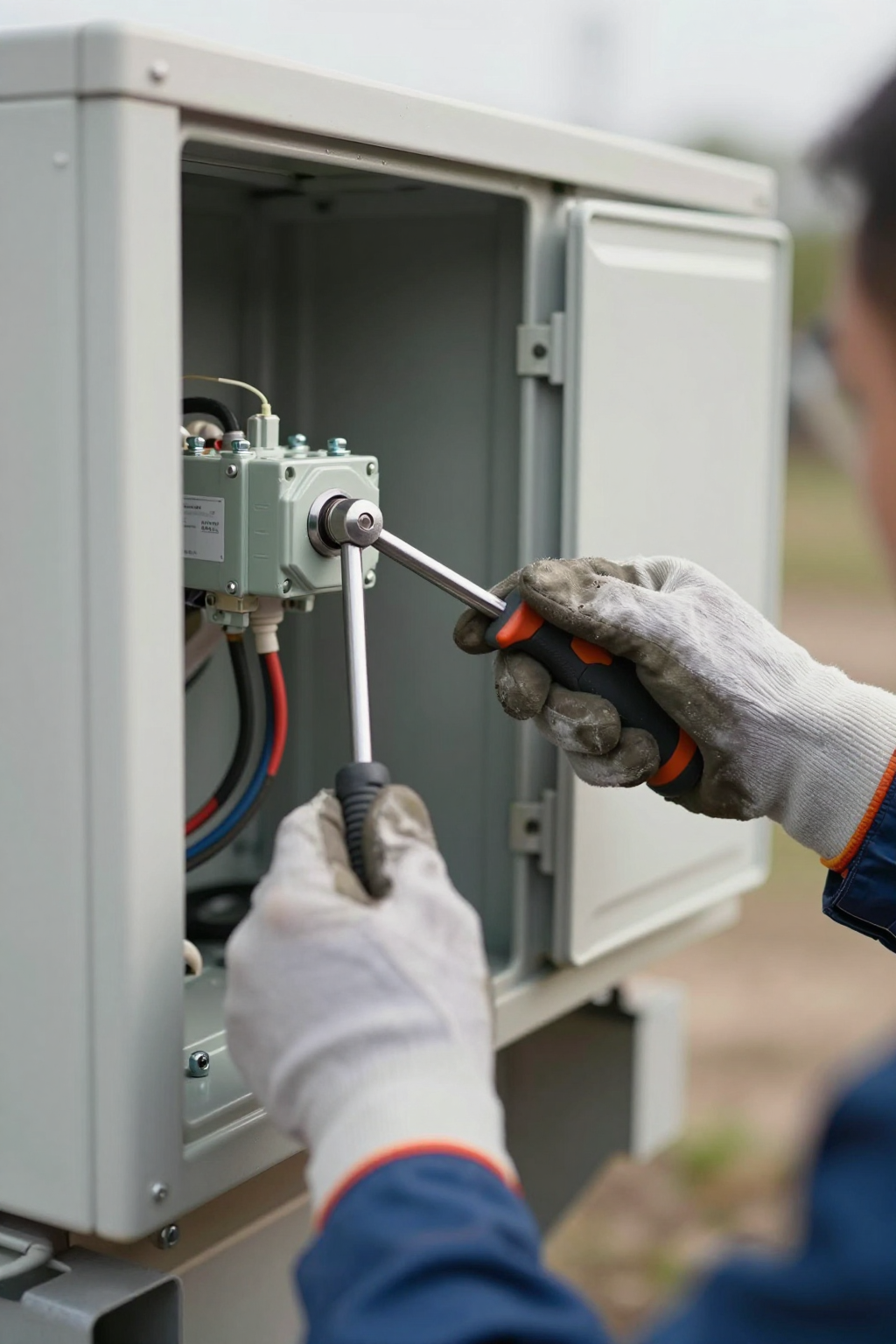
- Torque Pattern: Tighten fasteners in a star or cross pattern (similar to a car wheel) to ensure even compression.
- Torque Limit: Do not crush the gasket. Compress it by 30–50% of its thickness (check manufacturer guidelines). Over-compression destroys the rubber’s memory.
- Thread Locker: Use a medium-strength thread locker (e.g., Loctite Blue) on mounting nuts to prevent loosening due to compressor vibration.
Electrical & Condensate
- Cable Glands: Ensure power and control wires enter through rated cable glands, not open grommets.
- Condensate Routing: Verify the condensate drain tube is not kinked and routes water away from the seal area. A blocked drain can cause the internal pan to overflow inside the cabinet.
Expert Field FAQ
Q: Can I use silicone sealant instead of the provided gasket?
A: Generally, no. While silicone seals well, it makes maintenance difficult. If you need to replace the unit, removing cured silicone can damage the cabinet paint, leading to corrosion. A high-quality EPDM or Neoprene gasket is preferred for serviceability.
Q: How does vibration affect panel mount DC aircon leak prevention?
A: Vibration from the compressor or external sources (e.g., heavy machinery nearby) can loosen fasteners over time. Once the fasteners loosen, the gasket compression drops, creating a leak path. Using nyloc nuts or thread locker is essential.
Q: My cabinet has a negative pressure vent. Does this affect the aircon?
A: Yes. If you have a hybrid system with an exhaust fan, you might create negative pressure that pulls dust in through the aircon gasket if it’s not perfect. It is usually best to keep the cabinet fully sealed when using active refrigeration.
Q: What is the impact of solar loading on the seal?
A: Direct sun degrades rubber gaskets (UV damage) and causes high thermal expansion. Installing a sunshield over the cabinet and the cooling unit protects the gasket from UV and reduces the thermal load, extending seal life.
Q: How often should I replace the mounting gasket?
A: In mild climates, gaskets can last the life of the unit. In extreme desert or offshore environments, inspect the gasket every 2–3 years for cracking or hardening. If the unit is removed for service, always replace the gasket.
Q: Does the Micro DC Aircon need a specific orientation?
A: Yes. Compressor-based systems rely on oil circulation. They must be mounted within a few degrees of vertical (check specific model specs) to ensure lubrication and proper condensate drainage.
Conclusion & System Logic
The reliability of an outdoor enclosure is defined by its weakest link. While engineers rightly focus on the specifications of the DC condensing unit or the battery chemistry, the physical interface—the gasket and the mounting flange—is often where the battle against the elements is won or lost.
Effective panel mount DC aircon leak prevention requires a holistic approach. It starts with selecting a closed-loop cooling solution like the Micro DC Aircon series that eliminates air exchange. It continues with a design that accounts for thermal expansion, vibration, and environmental loads. Finally, it relies on disciplined installation practices—proper torque, surface preparation, and cable management.
By treating the mounting interface as a critical engineering subsystem rather than an afterthought, you ensure that your remote equipment remains dry, cool, and operational, regardless of what the weather brings.
Get a Sizing & Integration Consultation
Don’t leave your enclosure sealing and thermal management to chance. Our engineering team can help you select the right Micro DC Aircon model and advise on the integration details for your specific environment.
Send us the following inputs for a technical review:
- Ambient Conditions: Max/Min Temperature and Solar Load context.
- Target Internal Temperature: Max allowable temp for your critical components.
- Heat Load Estimate: Total waste heat (Watts) generated by internal electronics.
- Power Source: Available DC voltage (12V/24V/48V) and current limits.
- Sealing Requirement: Target IP/NEMA rating (e.g., NEMA 4/4X).
- Service Expectations: Desired maintenance interval (e.g., 1 year, 5 years).
0 条评论